








The term industry plant has become one of the most debated labels in modern music culture. It refers to an artist who appears to rise organically—through social media, underground buzz, or independent hustle—while actually benefiting from early backing by record labels, marketing agencies, or powerful industry connections. In simple terms, an industry plant is believed to be “manufactured success presented as authenticity.”
Understanding what an industry plant means requires looking beyond the surface of viral fame. Today’s music ecosystem is shaped by streaming algorithms, curated playlists, influencer marketing, and label-driven content strategies that often blur the line between independent growth and corporate engineering. As a result, audiences frequently question whether rising stars are truly self-made or strategically positioned.
In this article, we break down how the industry plant narrative emerged, why it persists, and what it reveals about trust, authenticity, and power in the modern music economy. We also explore how labels build momentum behind artists long before the public becomes aware of them, and why this practice continues to spark debate across fan communities.
The industry plant conversation is not just about conspiracy or exposure—it reflects a broader cultural shift in how audiences interpret fame in an era where visibility can be manufactured at scale.
What Is an Industry Plant?
An industry plant is typically defined as an artist who is marketed as independent or grassroots while actually receiving significant industry backing early in their career. This support can include:
- Label funding before public debut
- Professional songwriting teams
- Paid media placement and influencer seeding
- Strategic playlist positioning on streaming platforms
The controversy arises when this support is not transparent. Fans often feel misled when an artist framed as “authentic” is later revealed to have had corporate backing from the beginning.
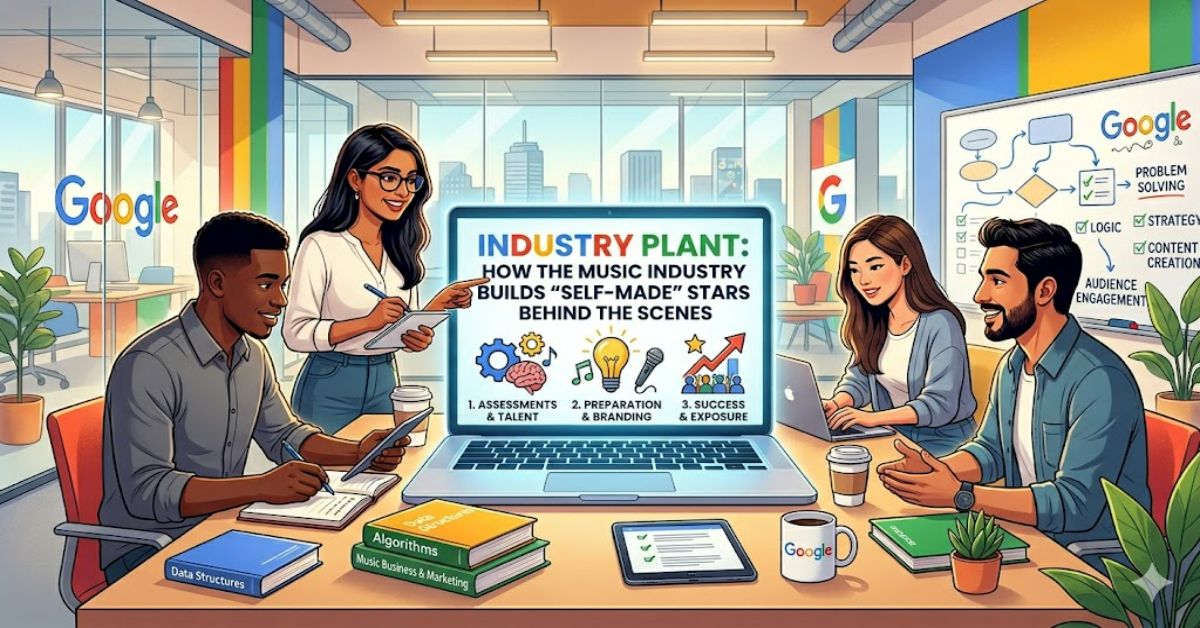
How Industry Plants Are Built: System-Level Breakdown
Modern music promotion operates like a layered system rather than a single breakthrough moment.
Core Mechanisms Behind Industry Plant Development
| System Layer | Function | Example Strategy |
| Label Development | Early artist funding | Studio time, songwriting camps |
| Digital Marketing | Controlled visibility | TikTok seeding, influencer pushes |
| Streaming Strategy | Algorithm placement | Playlist pitching, engagement spikes |
| Branding Layer | Identity construction | “Authentic” indie narrative |
In many cases, the perception of organic growth is intentionally designed. This is where the industry plant debate becomes relevant: the artist may genuinely be talented, but their exposure path is carefully engineered.
Why the Industry Plant Narrative Exists
The rise of the industry plant label is tied directly to how audiences interpret authenticity.
Key Drivers of the Narrative
- Overexposure of “overnight success” stories
- Lack of transparency in label-artist relationships
- Algorithm-driven virality replacing traditional discovery
- Fan communities seeking ownership over “underground” culture
The term is often used as a reaction to uncertainty. When success appears too fast, audiences assume hidden machinery behind it.
Comparison: Organic Growth vs Industry Plant Perception
| Factor | Organic Artist Growth | Industry Plant Perception |
| Discovery | Local scenes, DIY uploads | Label-assisted visibility |
| Growth Speed | Gradual | Rapid acceleration |
| Marketing | Minimal early-stage push | Coordinated campaigns |
| Public Perception | Authentic but slow | Suspiciously polished |
The distinction is not always factual—it is often perceptual. This is why the industry plant label is frequently debated rather than proven.
Cultural Impact of the Industry Plant Debate
The industry plant discussion has reshaped how fans engage with music.
It has created a culture where audiences:
- Investigate artist backgrounds more deeply
- Scrutinize label affiliations
- Question viral success patterns
- Value “underground credibility” more than chart success
This shift reflects a broader distrust in polished media narratives. In many online communities, calling someone an industry plant is less about fact and more about signaling skepticism toward manufactured popularity.
Three Analytical Insights Often Overlooked
1. Authenticity Is Now a Marketing Variable
Authenticity itself has become a branding tool. Labels often design campaigns that simulate organic growth, making the industry plant perception almost unavoidable in high-budget launches.
2. Speed of Virality Triggers Suspicion
Research in digital media behavior shows that rapid audience growth often increases skepticism. When an artist gains millions of streams quickly, fans often assume external engineering rather than organic discovery.
3. The Label Can Be Correct and Incorrect at the Same Time
An artist can be heavily supported by a label and still earn genuine fan interest. The industry plant label often ignores this dual reality, reducing complex systems into a binary judgment.
Risks and Trade-Offs in the Industry Plant System
Benefits for the Industry
- Faster artist scaling
- Predictable revenue pipelines
- Controlled branding narratives
Risks for Artists
- Backlash over perceived inauthenticity
- Long-term trust issues with fanbase
- Identity being shaped externally
Risks for Audiences
- Misinterpretation of genuine talent
- Over-skepticism toward new artists
- Reduced openness to mainstream discovery
The industry plant phenomenon ultimately reflects tension between commercial efficiency and cultural trust.
The Future of Industry Plant Culture in 2027
By 2027, the industry plant debate is likely to evolve rather than disappear.
Key trends shaping the future include:
- Increased transparency tools on streaming platforms
- AI-driven music discovery systems reducing label control
- Greater audience awareness of marketing mechanics
- Hybrid artist models blending independent and label support
However, as long as marketing systems exist, the perception of manufactured success will persist. Even if labels become more transparent, audiences may continue using the industry plant label as a cultural critique rather than a factual accusation.
Takeaways
- The industry plant concept reflects perceived gaps between authenticity and marketing.
- Modern music success is heavily influenced by structured digital promotion systems.
- Audience skepticism is driven more by perception than verifiable structure.
- Labels strategically balance visibility with “organic” storytelling.
- The debate reveals broader distrust in algorithm-driven fame.
- Transparency—not removal of marketing—is the likely future solution.
Conclusion
The idea of an industry plant sits at the intersection of music, marketing, and modern digital culture. While the term often carries negative assumptions, it reflects a real transformation in how artists are developed and promoted. In today’s ecosystem, success is rarely accidental; it is shaped by layered systems of funding, branding, and algorithmic exposure.
At the same time, audiences are not wrong to question how visibility is constructed. The tension between organic discovery and engineered promotion will likely continue shaping how fans interpret new artists. Ultimately, the industry plant narrative is less about identifying deception and more about understanding how modern fame is built.
FAQ
What does industry plant mean?
An industry plan’t is an artist perceived to be marketed as independent while actually receiving early backing from labels or industry professionals.
Are all industry plants fake artists?
No. Many are genuine musicians. The term refers to marketing structure, not artistic ability.
Why is the term industry plan’t controversial?
Because it is often based on perception rather than confirmed evidence, leading to debates about authenticity.
How do labels create industry plants?
Through early funding, controlled marketing campaigns, influencer seeding, and playlist placement strategies.
Is industry plan’t the same as mainstream success?
No. Mainstream success can be organic or engineered; the label depends on perceived transparency.
Can an independent artist become an industry plan’t?
Yes, if they later receive label backing that repositions their narrative as “self-made.”
Methodology
This article was developed through synthesis of publicly available music industry analysis, digital marketing behavior studies, and documented discussions from music journalism sources such as Billboard, Rolling Stone, and Music Business Worldwide. The goal was to separate cultural perception from structural industry practices while maintaining neutrality.
Limitations include the lack of transparent disclosure from labels regarding early-stage artist funding, which makes definitive classification of an industry plan’t difficult. Interpretations may vary depending on community standards and genre context.
References (APA)
- Music Business Worldwide. (2023). How streaming reshaped artist discovery and promotion models.
- Billboard. (2024). The evolving role of marketing in modern pop music.
- Rolling Stone. (2023). Inside the mechanics of viral music success on TikTok.
- IFPI. (2024). Global music report: State of the industry.