










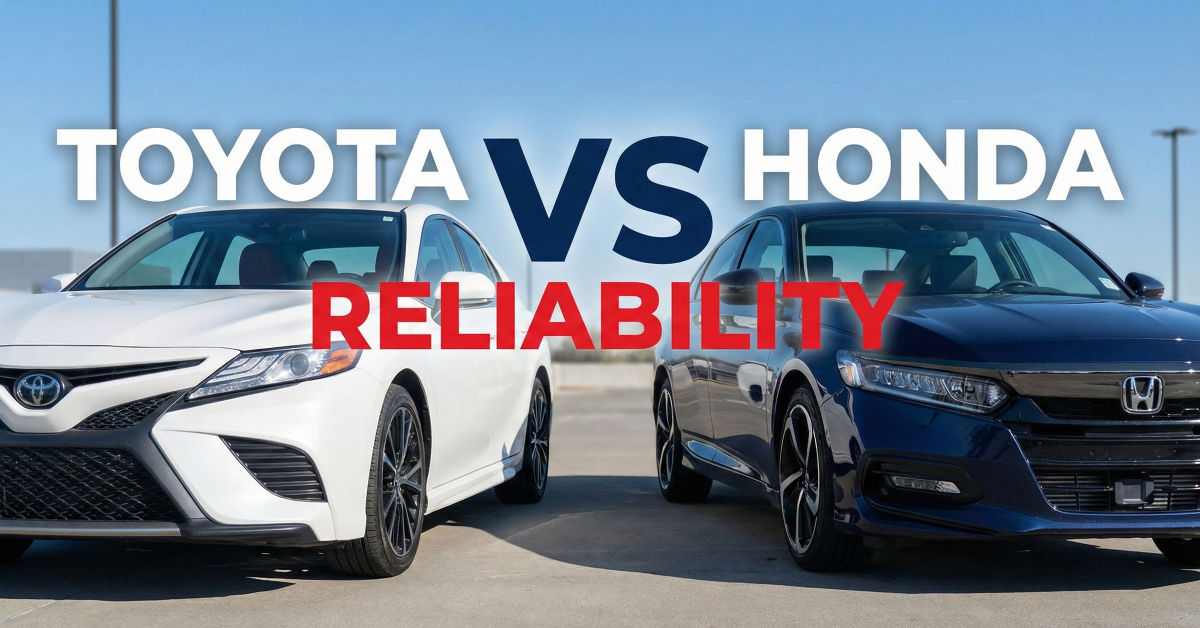
For many car buyers, choosing between Toyota and Honda is ultimately a question of reliability. Both brands are synonymous with durability, but subtle differences in design philosophy, maintenance demands, and long-term performance often influence ownership satisfaction. The question becomes clear which brand consistently delivers vehicles that last longer, require fewer repairs and retain value over time?
Toyota and Honda have long cultivated reputations for dependable vehicles. Toyota is celebrated for conservative engineering and proven hybrid and gasoline powertrains, while Honda often emphasizes driving dynamics, innovation, and sportier designs. Long-term studies and owner surveys show that Toyota slightly edges out Honda in overall reliability, yet Honda continues to hold strong performance in specific segments and models. Understanding these nuances is essential for informed purchasing decisions.
Legacy and Reputation: The Roots of Trust
Toyota’s reliability reputation traces back decades. During the 1980s and 1990s, models like the Corolla and Camry consistently exceeded 200,000 miles with routine maintenance, cementing the brand’s long-term dependability. Its conservative engineering approach emphasizes incremental improvements rather than radical redesigns, contributing to predictable performance and durability.
Honda’s legacy is slightly different. While also highly reliable, the brand’s emphasis on innovative engineering and sportier performance occasionally introduced complexity. Turbocharged engines, CVTs, and newer powertrains offer better efficiency and dynamics but can sometimes reduce long-term durability. Both brands, however, have established themselves as dependable, especially compared to the broader automotive market.
Statistical Comparisons
Public reliability surveys and longevity studies consistently rank Toyota slightly higher than Honda, although both exceed industry averages.
Reliability and Brand Rankings
| Study / Year | Toyota Rank / Score | Honda Rank / Score |
| Consumer Reports (2024) | 3rd (62/100) | 4th (59/100) |
| Longevity Study (200,000+ miles) | 6 of top 10 cars | 1 of top 16 cars |
| Estimated 10-Year Maintenance Cost | ~$6,000 | ~$7,500 |
These figures suggest that Toyota maintains an edge in consistency and predictability, whereas Honda’s reliability is more model-dependent.
Why Toyota Often Comes Out Ahead
Conservative Engineering and Proven Powertrains
Toyota favors well-tested engines and hybrid systems over experimental designs. This approach reduces unexpected failures and contributes to lower maintenance frequency, benefiting owners who prioritize long-term dependability.
Longevity and Real-World Mileage
Studies indicate a higher proportion of Toyota vehicles surpass the 200,000-mile mark compared to Honda. This advantage matters for owners who plan to keep vehicles for extended periods.
Predictable Maintenance Costs
Toyota’s maintenance costs are generally lower and more consistent than Honda’s. With an estimated 10-year cost of $6,000, Toyota owners benefit from a predictable upkeep schedule, reducing financial surprises over time.
Honda’s Strengths and Challenges
Performance-Oriented Engineering
Honda’s turbocharged engines and advanced transmissions deliver spirited performance and efficiency. However, these features occasionally introduce complexity that can impact reliability, especially in newer models.
Segment-Specific Advantages
Honda excels in compact sedans and smaller vehicles, offering superior handling, lighter weight, and comfortable interiors. In these segments, Hondas can rival or exceed Toyota in owner satisfaction and performance.
Variability Across Models
Because Honda pursues more aggressive engineering, reliability varies by model. Older, naturally aspirated vehicles tend to perform exceptionally, while newer, complex models may face higher maintenance needs.
Model-Level Considerations and Recent Trends
Even within Toyota and Honda, reliability is not uniform. Newer Toyota models, particularly redesigned SUVs and turbocharged engines, have shown slight dips in reliability. Similarly, Honda’s newer turbocharged Civics and CR-Vs demonstrate more frequent mechanical issues than their naturally aspirated predecessors.
Expert Insights
- Dr. Samuel Peters, automotive engineer: “Brand-level reliability is helpful, but individual models matter most. Research engines, transmissions, and redesign history before buying.”
- Maria Gonzalez, mechanic: “Well-maintained Hondas can exceed 300,000 miles, but newer models sometimes need expensive repairs. Toyota’s simplicity often pays off.”
- Elaine Kim, automotive journalist: “Consumer perception often lags reality. Model-specific data is more predictive than overall brand reputation.”
Long-Term Ownership
For owners planning to drive beyond 200,000 miles, Toyota offers predictable performance and easier maintenance. Honda can still deliver rewarding ownership experiences, but careful model selection and diligent maintenance are essential. Geography, road conditions, and parts availability also influence real-world reliability, highlighting the importance of context in evaluating long-term dependability.
Structured Comparisons
| Factor | Importance | Toyota | Honda |
| Long-term durability | Longevity beyond 200,000 miles | Strong, consistent | Mixed, model-dependent |
| Maintenance costs | Total cost of ownership | Lower (~$6,000/10 years) | Slightly higher (~$7,500/10 years) |
| Powertrain complexity | Risk of failure | Conservative, proven engines | Turbo and CVT add variability |
| Segment reliability | Vehicle class performance | Strong across segments | Competitive in compacts/sedans |
| Owner satisfaction | Resale value and experience | High, consistent | High, more variable |
Contextual Considerations
Reliability is influenced by environment, usage, and maintenance habits. Toyota’s simpler engines often outperform in regions with limited repair infrastructure. Honda performs well in urban settings and among owners prioritizing efficiency and handling. Total cost of ownership, including fuel, insurance, and resale value, should guide decision-making alongside brand reputation.
Takeaways
- Toyota generally offers higher long-term reliability and predictable maintenance costs.
- Honda remains competitive, especially in compact sedans and older models.
- Turbocharged and CVT-equipped Hondas may face higher repair frequency.
- Model-specific research is crucial; brand reputation alone is insufficient.
- Local conditions and usage patterns influence real-world performance.
- Both brands remain top-tier, but Toyota edges ahead in consistency.
- Informed decision-making ensures the most reliable ownership experience.
Conclusion
Toyota and Honda remain leaders in reliability, yet subtle differences shape long-term ownership outcomes. Toyota’s conservative engineering and proven powertrains offer predictability, while Honda’s innovative designs provide dynamic performance with more variability. Buyers in 2025 must evaluate individual models, maintenance requirements, and local conditions to ensure the best ownership experience Toyota vs Honda Reliability. Ultimately, careful research and realistic expectations are more important than brand loyalty, ensuring vehicles meet both performance and reliability needs over decades.
FAQs
Q: Is Toyota always more reliable than Honda?
A: No. Toyota generally has a slight edge, but Honda can be equally reliable in specific models.
Q: Are hybrid Toyotas more durable than Honda hybrids?
A: Generally, yes. Toyota’s hybrid systems are conservative and well-tested, contributing to longer lifespan.
Q: Do Honda turbo engines have reliability issues?
A: Some turbocharged and CVT-equipped Hondas experience higher repair frequency, though proper maintenance helps.
Q: Which brand has lower maintenance costs?
A: Toyota’s average 10-year maintenance is ~$6,000, compared to ~$7,500 for Honda, making it more predictable.
Q: Should I prioritize model over brand?
A: Yes. Model-specific performance, engine type, and maintenance history are more predictive than brand alone.
References
- Motor1. (2024). The Most Reliable Car Brands of 2024. Retrieved from https://www.motor1.com/news/743735/consumer-reports-most-reliable-car-brands-2024/ Motor1.com
- Consumer Reports. (2022, November). Hybrids, Sedans Have Fewest Problems in Consumer Reports’ 2022 Annual Auto Reliability Survey. Retrieved from https://www.consumerreports.org/media-room/press-releases/2022/11/hybrids-sedans-have-fewest-problems-in-consumer-reports-2022-annual-auto-reliability-survey/ Consumer Reports
- Cars.com. (2025). Toyota Again Tops Consumer Reports Annual Auto Reliability Survey. Retrieved from https://www.cars.com/articles/toyota-again-tops-consumer-reports-annual-auto-reliability-survey-519312/ Cars.com
- Torque News. (2025). Toyota’s 2 Least Reliable New Models Are Top‑Sellers. Retrieved from https://www.torquenews.com/1084/toyotas-2-least-reliable-new-models-are-top-sellers Torque News
- AutoTribute. (n.d.). Honda vs Toyota Reliability — Which Brand Comes Out on Top? Retrieved from https://autotribute.com/honda-vs-toyota-reliability/ autotribute.com