










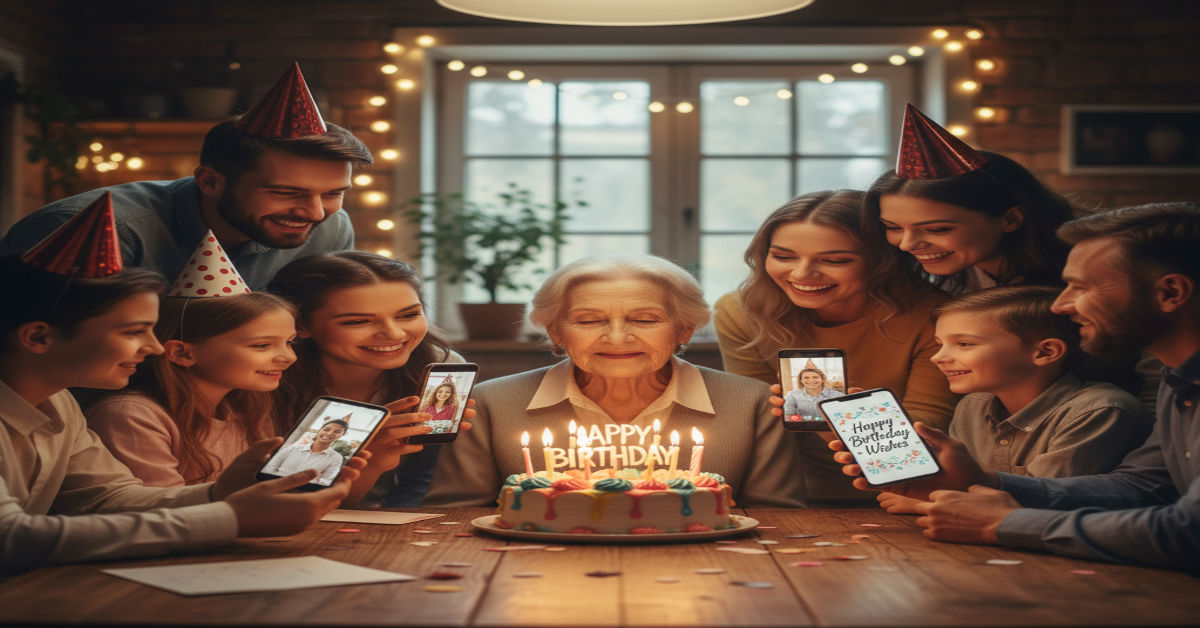
When you type or say “Happy Birthday” you do more than mark a calendar date — you reach across invisible lines of time and memory to acknowledge someone’s existence, their journey, and your connection to them. Birthday wishes answer a deep human impulse: to affirm identity, show that we care and remind someone they are not alone.
Since ancient times, societies have celebrated birthdays — initially of gods and rulers — but over millennia, the tradition evolved into the deeply personal rituals we practice today. Birthday wishes, whether spoken in person, written in a card, or typed in a text message, remain among the most enduring and universal human gestures across cultures.
In contemporary life — where people drift across cities and continents, relationships stretch across digital networks and decades — “Happy Birthday” remains a touchpoint, a small but powerful gesture capable of strengthening belonging, triggering nostalgia, and bringing honesty to relationships. This article explores the history, the psychology, the cultural variety, and the social functions behind those two words.
Origins and History
The practice of marking a “birth day” is ancient. Early birthday celebrations in ancient Egypt focused on pharaohs’ coronation days, marking when a ruler was believed to become divine. Over time, as ancient Greeks and Romans adapted the idea, birthdays became human, not just divine. Greeks celebrated birthdays of gods, while Romans instituted public celebrations for citizens, making birthday observance a social tradition.
The transition to personal birthday celebrations — including cakes, well-wishes and gifts — evolved gradually. By the Victorian era, greeting cards became a common way to mark birthdays. With advances in printing and postal systems, mass-produced cards became affordable, spreading the custom widely. Today, birthday cards remain one of the most popular types of greeting cards, with billions exchanged each year.
The Psychology of Birthday Wishes
Birthday wishes do more than follow tradition — they tap into deep psychological needs. Receiving a birthday greeting reinforces a sense of belonging and social connection. It validates one’s identity and reminds individuals that they have a place in a community.
The act of wishing “Happy Birthday” also carries symbolic weight. It marks the completion of one year and the beginning of another. This temporal punctuation serves both to celebrate past achievements and to express hope for the year ahead. The compact phrase itself is emotionally resonant, offering affirmation and connection in just two words.
Cultural Variations in Birthday Wishes
Birthday celebrations and greetings vary widely across cultures, reflecting unique values, superstitions, and social customs.
| Region / Culture | Customary Birthday Practices / Greeting Variants |
| Scandinavia (Denmark, Norway) | Flags are raised outside homes, and schoolchildren often sing and dance for the birthday child. |
| Latin America (Mexico, Uruguay, Argentina) | Piñatas are used for celebrations; Quinceañera marks a girl’s 15th birthday as a rite of passage. |
| Russia / Eastern Europe | Flowers are commonly given, especially to women; certain milestone birthdays, like the 40th, may carry superstitions. |
| China | Traditional “longevity buns” symbolize long life and are often served instead of cake. |
Across cultures, the impulse to celebrate birthdays is universal, but the forms — songs, gifts, cakes, or symbolic rituals — reflect local histories and values. Some cultures also maintain traditional phrases, such as “Many happy returns,” as a more formal alternative to “Happy Birthday.”
Modern Evolution of Birthday Wishes
The way we send Happy Birthday Wishes has transformed dramatically in recent decades. While physical cards remain popular, digital messages, social media posts, e-cards, and video calls have become common.
Digital greetings allow people to connect instantly across time zones and distances, though many still value handwritten cards for their tangible, personal quality. Sociologists note that greeting cards, including birthday cards, serve as emotional community tools: they objectify relationships and preserve them over time. Despite technology, the underlying emotional and social purpose of birthday wishes persists.
| Aspect | Traditional Birthday Wishes | Modern Birthday Wishes |
| Medium | Handwritten cards, physical gifts, in-person visits | Text messages, social media posts, e-cards, video calls |
| Sentiment Style | Thoughtful, personal, keepsake-oriented | Quick, immediate, often broadcast to many friends |
| Accessibility | Requires physical presence or mailing | Instant and global, across continents |
| Emotional Weight | Tangible, can be kept and revisited | Often ephemeral, may disappear in notification feeds |
| Social Reach | Close friends, family, acquaintances | Broader networks, including distant friends and colleagues |
Expert Perspectives
“Birthday wishes are more than a polite formality — they’re a reaffirmation of identity, community, and psychological belonging.” – Social-psychology commentator
“Greeting cards act as emotional-community tools, objectifying relationships through ritualized language and maintaining social bonds.” – Sociological analysis
“Birthdays let individuals pause, reflect on the past year, and look forward; ‘Happy Birthday’ becomes a symbolic bridge between past and future.” – Cultural traditions analyst
These perspectives reinforce that birthday wishes are not empty gestures but meaningful acts with real emotional and social significance.
Why Birthday Wishes Matter
Happy Birthday Wishes serve several overlapping functions:
- Recognition and belonging: Acknowledge someone’s presence and importance in your life.
- Temporal punctuation: Mark the passage of time and the transition into a new year.
- Emotional reinforcement: Boost self-esteem and provide comfort through recognition.
- Cultural continuity: Maintain customs and shared human experiences.
- Ritualized social connection: Strengthen emotional bonds through structured social acts.
Takeaways
- Birthday wishes address fundamental human needs for recognition and belonging.
- The tradition evolved from religious and political rituals to personal celebrations.
- Receiving wishes enhances self-esteem and emotional well-being.
- Cultural practices around birthday wishes vary widely but share the impulse to celebrate.
- Both physical and digital greetings remain emotionally significant despite technological changes.
Conclusion
In a world of fast-paced notifications and global connections, the simplicity of “Happy Birthday” endures as a powerful expression of care. Whether delivered through a handwritten card, a text, or a social media post, the phrase communicates recognition, remembrance, and emotional connection.
A birthday is more than a date it is a milestone and a ritualized moment of reflection. By sending a birthday wish, we offer affirmation and human warmth, bridging time, distance, and circumstance. Ultimately, “Happy Birthday Wishes” is small in words but vast in its social and emotional resonance, reminding us of the enduring value of human connection.
FAQs
Why do birthday wishes make people feel happy?
They affirm identity and social belonging, showing others remember and value you, which boosts self-esteem.
When did birthday cards become common?
Mass-produced cards became popular in mid-19th century Britain due to advances in printing and postal services.
Do birthday traditions differ across cultures?
Yes. While the celebration is universal, customs — such as piñatas, flowers, flags, or symbolic foods — vary widely.
Has digital messaging reduced the value of birthday wishes?
Not necessarily. Digital methods allow broader reach, while the emotional intent remains meaningful.
Why are physical greeting cards still valued?
They provide tangible keepsakes that anchor memories and relationships, offering lasting emotional significance.