








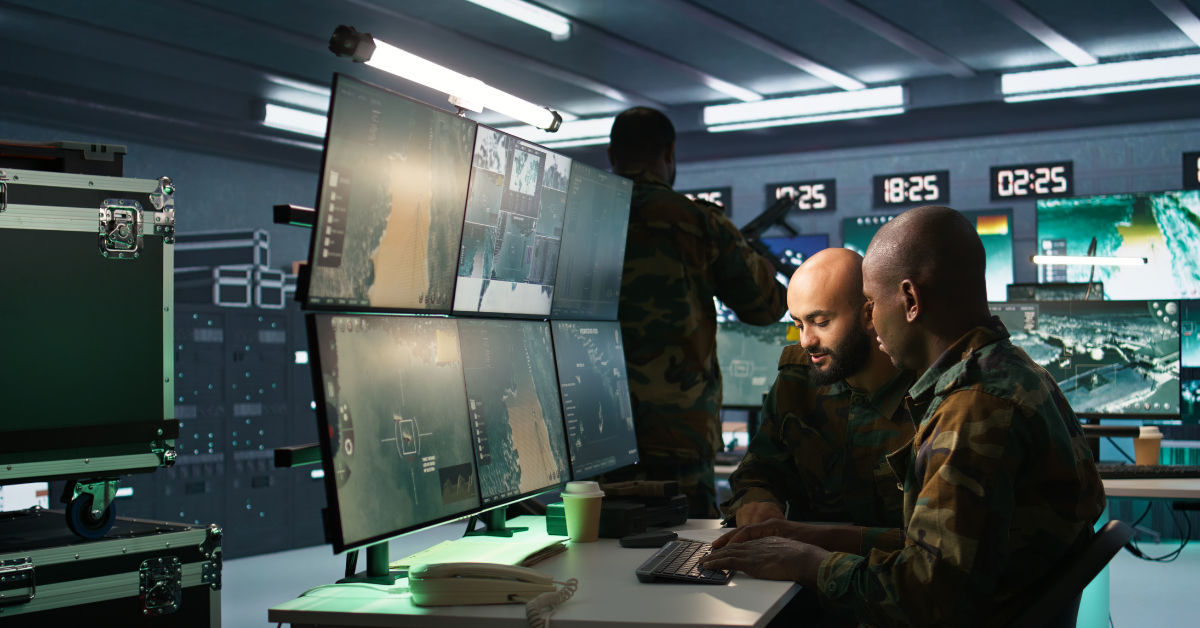
In the rapidly evolving world of defense technology, small but specialized firms are increasingly shaping how militaries operate on the battlefield. Kutta Technologies Inc., headquartered in Phoenix, Arizona, exemplifies this trend. The company develops advanced command-control-communications (C3) systems and software for unmanned vehicles and tactical operations, serving the U.S. Department of Defense, Homeland Security, and related agencies. Within the first hundred words, it is clear that Kutta’s work is critical to the operation, coordination, and visualization of unmanned systems, providing solutions that help streamline mission execution and enhance situational awareness.
Founded as a compact, agile firm and now a subsidiary of Sierra Nevada Corporation, Kutta focuses on both hardware and software solutions that allow seamless interaction with robotic platforms. Its flagship products, including the Kutta Tactical Controller (K-TAC) and Unified Ground Control Station (UGCS) software, prioritize interoperability and open architecture. These features address long-standing challenges in the defense industry, where diverse unmanned platforms often required multiple proprietary interfaces. By unifying command and control, Kutta reduces operational complexity and allows operators to focus on mission-critical decisions.
Despite having approximately 75 employees and an annual revenue of $6.4 million, Kutta’s impact extends beyond its size. Its innovations in unmanned systems control have earned federal contracts and positioned the company as a key player in the defense technology ecosystem. This article examines Kutta Technologies’ history, its core products, its role in federal programs, and the broader significance of its work in shaping the future of unmanned operations.
Origins and Development
Kutta Technologies Inc began in Phoenix as a firm focused on solving a specific problem: how to provide effective, interoperable control for unmanned systems across multiple domains. From the outset, the company concentrated on software, hardware, and human-machine interface development for tactical and robotic operations. Its early work laid the foundation for advanced mission planning, visualization, and vehicle coordination systems.
Over time, the firm leveraged research grants and defense contracts to expand its capabilities. Early projects centered on networked unmanned aerial systems and user interfaces that enabled operators to manage multiple vehicles simultaneously. These initiatives were crucial in establishing Kutta’s reputation as a reliable developer of high-performance, safety-critical systems for federal clients.
Integration into Sierra Nevada Corporation’s broader defense portfolio further strengthened Kutta’s position. SNC provided access to larger contracts, extensive engineering resources, and collaboration opportunities with other defense technology units, enabling Kutta to scale its solutions for more complex operations while maintaining its focus on interoperability and modular design.
K-TAC: Innovation in Tactical Control
The Kutta Tactical Controller (K-TAC) is the centerpiece of the company’s product offerings. This handheld, ruggedized device allows operators to control diverse unmanned systems—including aerial, ground, and maritime platforms—using a single interface. Traditionally, operators relied on separate controllers for each vehicle type, which increased cognitive load and reduced operational efficiency. K-TAC addresses this challenge by integrating modular hardware and software into one intuitive system.
The KTAC 2.0, the latest version, exemplifies Kutta’s focus on practical usability. Lightweight, durable, and compatible with both tethered and untethered operation, the controller is designed to withstand harsh field conditions while providing seamless control. By using open architecture and commercial off-the-shelf components, Kutta ensures interoperability with existing military systems, including Nett Warrior and the Android Tactical Assault Kit (ATAK).
K-TAC also integrates with Kutta’s Unified Ground Control Station software, enabling real-time mission planning, tactical visualization, and multi-vehicle coordination. This combination creates a unified operational picture, reducing the need for multiple control interfaces and allowing operators to respond quickly and accurately to dynamic situations.
Software and Integration
While K-TAC represents Kutta’s hardware innovation, the company’s software platforms are equally significant. The Unified Ground Control Station (UGCS) provides mission planning, execution, and monitoring tools, enabling operators to manage multiple unmanned assets efficiently. The software adheres to open standards, facilitating integration with a wide range of unmanned systems, regardless of manufacturer.
Kutta’s software also incorporates automation, decision-support tools, and multi-vehicle coordination algorithms. These capabilities reduce operator workload, improve efficiency, and enable more effective manned-unmanned teaming. The company’s emphasis on open standards and interoperability ensures that its systems can adapt to evolving military requirements, from tactical reconnaissance to autonomous mission execution.
Integration extends beyond individual platforms. As part of Sierra Nevada Corporation, Kutta’s technology contributes to broader unmanned systems programs, supporting multi-domain operations and aligning with U.S. military objectives for autonomous and semi-autonomous teaming between human operators and robotic assets.
Federal Programs and Contracts
Kutta Technologies maintains strong relationships with U.S. federal agencies. Its K-TAC system was selected for the Army’s Soldier Robotic Controller program, aimed at standardizing control interfaces for unmanned vehicles. The program’s goal is to simplify operations, improve efficiency, and ensure that soldiers can interact effectively with a wide range of robotic systems.
The company has also participated in research initiatives such as DARPA’s Gremlins program, which explored the use of reusable unmanned aerial swarms. Kutta provided multi-vehicle control software and algorithms, demonstrating the firm’s capacity to contribute to advanced, high-risk defense research projects.
These federal engagements illustrate Kutta’s role in shaping both current operational capabilities and future concepts for unmanned system control, emphasizing interoperability, safety, and operator efficiency.
Industry Position and Challenges
Operating within the defense technology sector presents unique challenges. Kutta faces competition from larger contractors investing in autonomy, artificial intelligence, and integrated command systems. At the same time, the company must navigate strict regulatory requirements, cybersecurity standards, and procurement protocols.
Kutta’s use of commercial off-the-shelf components and open software architectures helps maintain cost-effectiveness and interoperability but also requires careful management of cybersecurity and supply chain risks. The firm’s focus on compact, agile development allows it to innovate rapidly while remaining responsive to evolving defense requirements.
Despite its size, Kutta’s specialized expertise positions it as a critical contributor to the defense technology ecosystem, particularly in the niche of unmanned system command and control.
Conclusion
Kutta Technologies Inc. represents a vital but often understated force in U.S. defense innovation. Through its hardware and software solutions, the company enhances the effectiveness, efficiency, and interoperability of unmanned systems across multiple domains. Its compact size belies its strategic importance: with roughly 75 employees, Kutta influences the design and operation of unmanned systems in ways that resonate across federal programs and future military operations.
By combining rugged, user-focused hardware with flexible, interoperable software, Kutta addresses the growing need for unified, operator-centric solutions in modern tactical environments. As unmanned systems continue to proliferate and the demands of autonomy increase, Kutta’s contributions to human-machine collaboration and battlefield visualization will remain highly relevant.
FAQs
What is Kutta Technologies Inc.?
Kutta is a Phoenix-based defense technology company specializing in command-control-communications systems for unmanned vehicles and tactical applications.
What are the company’s key products?
Kutta develops the Kutta Tactical Controller (K-TAC) and Unified Ground Control Station (UGCS) software for robotic control and mission planning.
Who are Kutta’s clients?
The company serves U.S. Department of Defense, Homeland Security, and other federal agencies requiring unmanned system capabilities.
What makes KTAC unique?
KTAC integrates control for multiple unmanned systems into one ergonomic, ruggedized interface, emphasizing open architecture and interoperability.
Where is Kutta Technologies located?
The company is headquartered at 2075 W Pinnacle Peak Rd Ste 102, Phoenix, Arizona.