









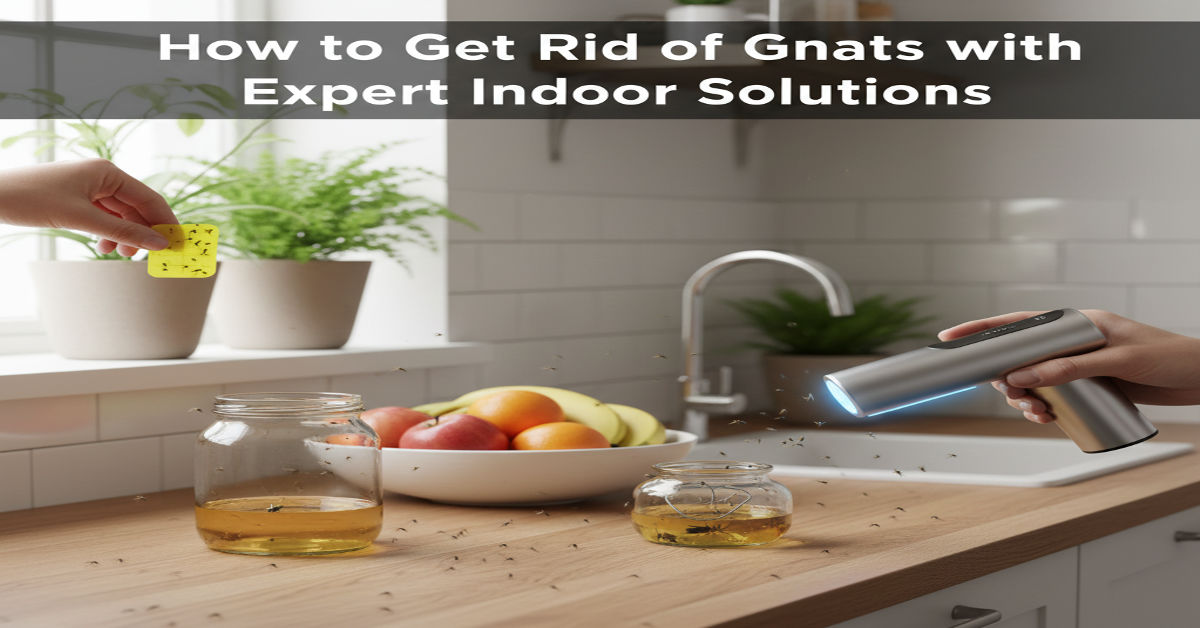
Gnats arrive quietly and then, suddenly, they are everywhere—hovering near the fruit bowl, clustering around houseplants, rising in clouds from sink drains. They are tiny, persistent and deeply irritating. For many households, the appearance of gnats feels mysterious and inevitable. In reality gnats are predictable. They are drawn by moisture, organic matter and warmth, and once those conditions exist, they reproduce with astonishing speed.
To get rid of gnats, you must do two things at once eliminate the adult insects you can see and remove the environments that allow them to breed. Traps alone will not solve the problem. Neither will obsessive cleaning if larvae remain hidden in soil or drains. The solution lies in understanding what kind of gnat you are dealing with, why it chose your home, and how its life cycle can be interrupted.
This article explains how to do exactly that. It begins with identification—because fruit flies, fungus gnats, and drain flies behave differently and require different strategies. It then walks through immediate control methods, from simple homemade traps to targeted cleaning routines. Finally, it focuses on prevention: the small, often overlooked habits that determine whether gnats disappear for good or return in waves.
Gnats are not a sign of failure or filth. They are a sign of opportunity. Remove that opportunity, and they leave.
Understanding Gnats: What They Are and Why They Appear
“Gnat” is not a single species but a loose term used to describe several kinds of small flies that thrive around humans. Indoors, most infestations fall into three categories: fruit flies, fungus gnats, and drain flies. Each is drawn to a specific ecological niche inside the home.
Fruit flies are attracted to fermentation. Overripe fruit, spilled juice, wine residue, and even recycling bins can serve as breeding grounds. Fungus gnats, often mistaken for fruit flies, originate in houseplant soil, where moisture and decaying organic matter support their larvae. Drain flies live in pipes, feeding on the thin film of organic material that coats drain interiors.
What all gnats share is a dependence on moisture and organic matter. Warm indoor temperatures allow them to reproduce year-round, often faster than homeowners realize. A single female can lay dozens of eggs, and in optimal conditions, those eggs mature into adults in less than two weeks.
Understanding this ecology reframes the problem. Gnats are not invaders so much as opportunists. Elimination requires removing what they need to survive.
Identifying the Source Before Taking Action
Before deploying traps or sprays, it is essential to determine where the gnats are coming from. Misidentification leads to frustration: vinegar traps will not solve a fungus gnat problem, and dry soil will not affect fruit flies breeding in a trash bin.
Visual cues help narrow it down. Gnats hovering around fruit, bottles, or counters are likely fruit flies. Those clustering near plant pots or flying up when soil is disturbed are almost certainly fungus gnats. Insects emerging from sink drains, especially bathrooms, point to drain flies.
Timing also matters. Fungus gnats tend to appear after watering plants. Drain flies are most noticeable in the early morning or late evening. Fruit flies spike when produce ripens or trash accumulates.
Once the source is identified, control becomes far more efficient—and far more successful.
Immediate Control: Traps That Reduce Adult Gnats
Traps are most effective when used as part of a larger strategy. Their purpose is to reduce the adult population, slowing reproduction while you address breeding sites.
| Trap Method | How It Works | Best Use Case |
| Apple cider vinegar + dish soap | Attracts gnats with fermentation scent; soap breaks surface tension | Fruit flies |
| Yellow sticky cards | Visual attraction leads gnats to adhesive surface | Fungus gnats |
| Covered fruit trap | Gnats enter but cannot escape | Kitchen infestations |
| Plug-in light traps | Uses light attraction without chemicals | General indoor use |
| Candle and water method | Gnats follow flame and fall into liquid | Nighttime control |
Homemade vinegar traps remain popular because they are inexpensive and effective. A shallow bowl filled with apple cider vinegar and a drop of dish soap placed near activity zones can capture dozens of gnats overnight. Sticky traps placed just above plant soil are particularly effective against fungus gnats, intercepting adults before they lay eggs.
Traps should be viewed as temporary tools. They buy time. They do not solve the underlying problem.
Eliminating Breeding Grounds: The Real Solution
Long-term gnat control depends on eliminating larvae, not just adults. This means removing moisture, food, and organic buildup wherever gnats reproduce.
Kitchens and Food Storage
Produce should be refrigerated or stored in sealed containers. Counters and sinks should be wiped nightly. Trash and recycling bins must be emptied frequently and cleaned regularly, as residue at the bottom is a common breeding site.
Even small oversights—a forgotten banana peel, a sticky wine bottle—can sustain a population.
Drains and Plumbing
Drain flies require organic buildup inside pipes. Flushing drains with boiling water several times a week disrupts their habitat. A mixture of baking soda followed by vinegar helps loosen residue, while a stiff drain brush can physically remove buildup near the opening.
Chemical cleaners are effective but often unnecessary if mechanical cleaning is consistent.
Houseplants and Soil
Fungus gnats thrive in persistently moist soil. Allowing the top two inches of soil to dry between waterings dramatically reduces larvae survival. Improving drainage, switching to sterile potting mixes and removing decaying leaves from soil surfaces further limits breeding.
A thin layer of sand or horticultural grit on top of the soil can prevent adults from laying eggs.
Expert Perspectives on Gnat Control
Entomologists consistently emphasize source control over extermination. One recurring theme in pest management research is that visible insects represent only a fraction of the problem. The majority of a gnat population exists unseen, as eggs and larvae.
Home sanitation specialists also highlight humidity control. Indoor humidity above 55 percent creates ideal conditions for gnats and other insects. Dehumidifiers, ventilation fans, and improved airflow reduce attractiveness across the entire home.
The consensus is clear: successful gnat control is environmental, not chemical.
Comparing Common Gnat Types and Solutions
| Gnat Type | Primary Breeding Area | Most Effective Response |
| Fruit flies | Fermenting food and liquids | Remove food sources, vinegar traps |
| Fungus gnats | Moist potting soil | Dry soil, sticky traps |
| Drain flies | Organic buildup in pipes | Drain cleaning |
| Outdoor gnats (indoors) | Damp entry points | Seal openings, reduce moisture |
This comparison underscores why a single “solution” rarely works. Precision matters.
Prevention: Habits That Keep Gnats Away
Once gnats are gone, prevention determines whether they stay gone. The most effective measures are simple but consistent.
Food should never be left exposed overnight. Houseplants should be watered intentionally, not habitually. Drains should be maintained before they smell or clog. Humidity should be monitored, especially in warm months.
Ventilation plays a quiet but powerful role. Gnats prefer still air. Kitchens and bathrooms benefit from regular airflow, whether from exhaust fans or open windows.
Prevention is not about perfection. It is about removing enough opportunity that gnats cannot establish themselves again.
Takeaways
- Gnats appear because indoor environments provide moisture and organic matter.
- Identifying the type of gnat determines the correct solution.
- Traps reduce adults but do not eliminate infestations alone.
- Breeding sites—soil, drains, food residue—must be addressed.
- Moisture and humidity control are central to prevention.
- Consistent habits matter more than aggressive treatments.
Conclusion
Gnats test patience precisely because they are small, fast and prolific. But they are also predictable. Their presence reflects conditions we can change, often with modest effort and careful attention. When homeowners shift focus from killing insects to reshaping environments, infestations resolve more quickly and return less often.
The process is not dramatic. It involves drying soil, wiping counters, cleaning drains, and paying attention to humidity. Yet these quiet interventions disrupt the gnat life cycle more effectively than sprays or gadgets alone.
In that sense, getting rid of gnats is less about control than balance. Restore balance to moisture, cleanliness, and airflow, and the gnats—having lost their advantage—simply disappear.
FAQs
Why do gnats keep coming back after trapping them?
Because traps kill adults but do not remove larvae or breeding sites. Without source control, new gnats emerge quickly.
Are gnats harmful to humans?
Most indoor gnats do not bite and pose minimal health risks, though they are unsanitary and irritating.
How long does it take to eliminate gnats completely?
With proper source removal, most infestations resolve within one to two weeks.
Can houseplants be saved if they have fungus gnats?
Yes. Drying soil, improving drainage, and using sticky traps usually resolves the issue without harming plants.
Do chemical sprays help?
They may kill visible adults but rarely address larvae. Environmental control is more effective and safer.
References
Good Housekeeping Institute. (2024). Expert tips to get rid of gnats inside the house and yard. https://www.goodhousekeeping.com/how-to-get-rid-of-gnats/ Good Housekeeping
Ideal Home. (2025, December). Flies around houseplants in December: why and how to stop them. https://www.idealhome.co.uk/garden/houseplants/flies-around-houseplants-in-december Ideal Home
Orkin. (2025). Gnat infestation: how to get rid of gnats in house. https://www.orkin.com/pests/flies/gnats/gnat-infestation Orkin
Tom’s Guide. (2021). How to get rid of gnats inside your home. https://www.tomsguide.com/how-to/how-to-get-rid-of-gnats Tom’s Guide
Technology.org. (2025). Get rid of gnats fast: prevention & elimination tips. https://www.technology.org/how-and-why/get-rid-of-gnats-guide/