










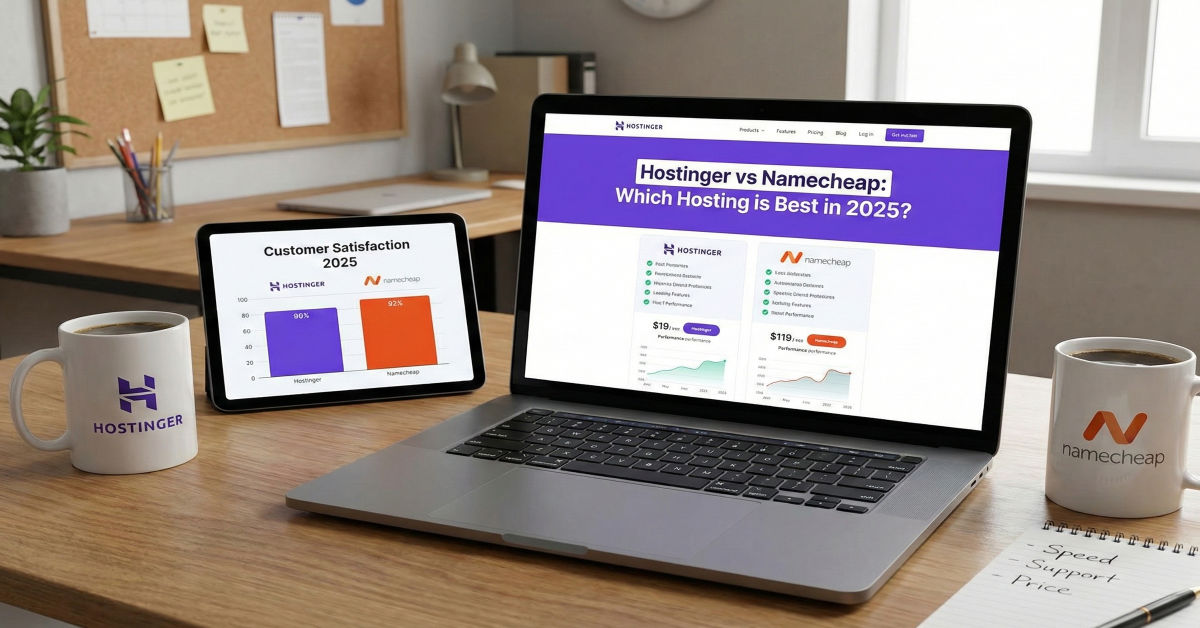
Selecting a web hosting provider is one of the most critical decisions for anyone launching a website, whether for a personal blog, portfolio or business venture. Hostinger and Namecheap are two of the most popular choices among budget-conscious users, but they cater to slightly different needs. Hostinger is known for faster load times, modern infrastructure and a rich set of features, while Namecheap prioritizes simplicity, affordability and domain management.
In 2025, both platforms continue to evolve, offering improved performance, reliability, and usability. Hostinger’s advantages often include advanced server technology, integrated caching, and a more beginner-friendly control panel. Namecheap, meanwhile, remains attractive for users who want low-cost entry-level hosting with reliable domain services.
Understanding these differences is essential for choosing a platform aligned with your website goals. The following analysis dives into performance, pricing, features, security, and real-world use cases, helping users make informed decisions.
Performance, Speed and Infrastructure
Performance is one of the most important differentiators between Hostinger and Namecheap. Hostinger leverages LiteSpeed servers and NVMe SSD storage, which results in faster website load times and improved responsiveness. Shared WordPress sites on Hostinger typically load in around 0.63 seconds, with a TTFB near 179 ms.
Namecheap, using primarily Apache-based servers, shows slower performance in comparative tests, with average load times around 1.21 seconds and TTFB near 412 ms. Hostinger’s global data center presence reduces latency for international visitors, whereas Namecheap’s fewer data centers can result in slower access outside primary regions.
While Namecheap is sufficient for small, static, or personal websites, Hostinger’s performance edge makes it the preferred choice for dynamic websites, e-commerce stores, or content-heavy WordPress sites where speed directly affects user experience and SEO outcomes.
Features and Hosting Tools
Hostinger and Namecheap differ significantly in the features they offer. Hostinger provides a range of tools including free domain registration (first year), SSL certificates, integrated CDN, 1-click WordPress installation, staging environments, and a custom control panel (hPanel). These tools simplify site management, especially for beginners.
Namecheap relies more on cPanel and basic hosting features. While it provides SSL certificates and domain privacy, advanced tools such as integrated caching, staging environments, and automated malware scanning are either limited or require additional purchases.
Hostinger’s bundled features reduce the need for third-party tools, making it suitable for users who want a complete hosting package. Namecheap, however, is ideal for those comfortable managing settings manually or who only need domain and basic hosting services.
Security, Backups and Reliability
Security and reliability are critical for website owners. Hostinger includes SSL certificates, DDoS protection, malware scanning, and automated backups in many plans. Its uptime is generally reliable, consistently meeting the 99.9% guarantee.
Namecheap also provides SSL, two-factor authentication, and basic backups, but advanced security features often require additional fees or higher-tier plans. While uptime is generally stable, occasional downtime has been reported, making it less ideal for high-traffic or mission-critical websites.
For small personal or static sites, Namecheap’s security is adequate. For business-critical or e-commerce sites, Hostinger’s stronger security and redundancy provide a safer and more reliable environment.
Pricing and Value
Pricing is often a deciding factor. Hostinger’s shared hosting starts at approximately $1.56–$2.99 per month depending on plan length and promotions, often including features such as free SSL and domain registration.
Namecheap offers slightly lower initial pricing of around $1.58–$1.98 per month, but entry-level plans provide fewer features and limited resources. Hostinger’s slightly higher cost often translates to better long-term value, especially for sites requiring performance optimization and added security.
Renewal rates should be considered, as both providers increase prices after the promotional term. Hostinger’s comprehensive features often justify the cost, while Namecheap is suited for budget-conscious users with simpler hosting needs.
Choosing the Right Host
Hostinger is best suited for professional websites, WordPress blogs, or small business sites that expect growth and traffic. Its advanced infrastructure, speed, and tools provide flexibility and scalability.
Namecheap works well for personal blogs, portfolios, or static sites where low cost and simplicity are prioritized. Users familiar with cPanel and those requiring only domain management may find Namecheap sufficient.
Developers managing lightweight or static projects may also benefit from Namecheap’s affordability. For scalable or performance-intensive sites, Hostinger is generally the superior choice.
Comparative Tables
Performance and Features Comparison
| Feature / Metric | Hostinger | Namecheap |
| Server Technology | LiteSpeed | Apache |
| Average Load Time | ~0.63 s | ~1.21 s |
| Storage | NVMe / SSD | SSD |
| Control Panel | hPanel | cPanel |
| CDN | Included on many plans | Optional / limited |
| Staging Tools | Yes | Limited / manual setup |
Pricing Snapshot (Shared Hosting)
| Aspect | Hostinger | Namecheap |
| Starting Price | $1.56–$2.99/month | $1.58–$1.98/month |
| Free Domain | Included first year | Sometimes included |
| Free SSL | Lifetime on many plans | Often first year only |
| Backup & Security | Included on many plans | Basic, add-ons required |
| Long-Term Value | Strong for growth | Budget-friendly for small sites |
Expert Insights
“Hostinger’s LiteSpeed and NVMe storage significantly improve performance, especially for WordPress sites,” says a web infrastructure analyst.
“For small, static sites, Namecheap offers an economical solution without unnecessary complexity,” notes a hosting consultant.
“Beginners benefit from Hostinger’s hPanel, staging tools, and bundled features, reducing setup time and configuration challenges,” observes an independent web developer.
These insights reinforce the observation that Hostinger excels in performance and tools, while Namecheap offers simplicity and affordability for less demanding projects.
Limitations and Considerations
Hostinger can have resource limits on shared plans, and renewal prices may rise after initial terms. Support quality may vary by agent experience.
Namecheap offers fewer advanced features and slower performance, potentially limiting its suitability for growing or resource-intensive websites. Both providers do not fully disclose CPU or RAM allocations, which can impact resource-heavy sites.
Understanding these limitations helps users make informed decisions based on their website’s expected traffic, resource needs, and technical expertise.
Key Takeaways
- Hostinger provides superior speed, performance and modern infrastructure.
- Its bundled features add value for beginners and growing sites.
- Namecheap is suitable for small, static, or personal websites.
- Hostinger is better for business-critical, high-traffic, or WordPress-based projects.
- Namecheap is cost-effective for domain management and simple hosting.
- Both hosts have shared resource limitations; consider managed hosting for heavy workloads.
- Renewal pricing and resource allocations should be reviewed before committing.
Conclusion
Choosing between Hostinger and Namecheap depends on the specific needs of your website. Hostinger excels in speed, features, and scalability, making it ideal for dynamic or business-oriented sites. Namecheap remains a viable option for cost-conscious users with simple hosting needs or smaller projects.
Ultimately, the decision should align with your website goals, whether that’s long-term growth and performance or low-cost, straightforward hosting. Understanding the trade-offs ensures you select the right host for both present and future needs.
FAQs
Q: Which host is faster?
A: Hostinger is generally faster due to LiteSpeed servers and NVMe storage.
Q: Does Namecheap offer a free domain?
A: Sometimes, depending on the plan; Hostinger more consistently includes a free domain for the first year.
Q: Which is better for WordPress sites?
A: Hostinger, thanks to optimized servers, staging tools, and 1-click WordPress installation.
Q: Is Namecheap suitable for personal blogs?
A: Yes, for small, low-traffic sites with minimal configuration needs.
Q: Are there security differences?
A: Hostinger includes more comprehensive built-in security; Namecheap offers basic protections and may require add-ons.
References
BloggingJoy. (2025, November). Hostinger vs Namecheap (November 2025): Which Hosting Is Best. Retrieved from https://bloggingjoy.com/hostinger-vs-namecheap/
Cybernews. (2025). Hostinger vs Namecheap: Which One is Better in 2025? Retrieved from https://cybernews.com/best-web-hosting/hostinger-vs-namecheap/
WebsitePlanet. (2025). Hostinger vs Namecheap: The Difference is in the Details in 2025. Retrieved from https://www.websiteplanet.com/blog/hostinger-vs-namecheap/
Websiterating. (2025). Hostinger vs. Namecheap: Choosing Between Two Budget Mediocrity Traps. Retrieved from https://www.websiterating.com/hosting/hostinger-vs-namecheap/
Hostingervsnamecheap.com. (2025). Shared Hosting Showdown: Hostinger vs Namecheap Speed Tests. Retrieved from https://www.hostingervsnamecheap.com/blog-post-3.html