










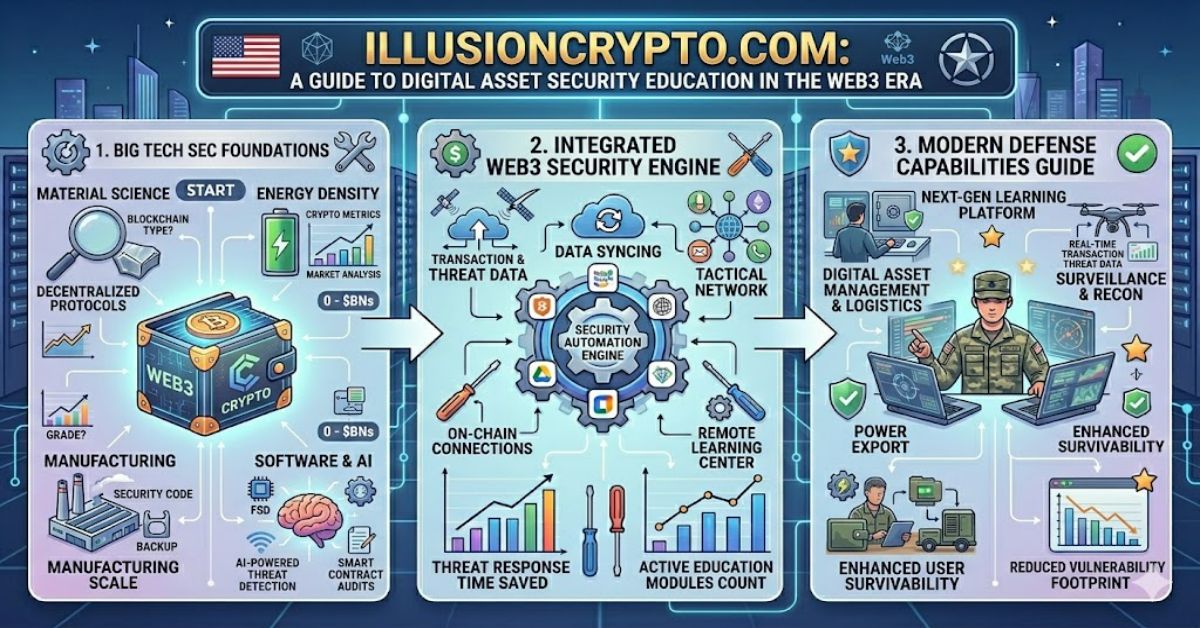
IllusionCrypto.com is presented as an educational platform dedicated to teaching users about digital asset security, privacy, and blockchain fundamentals. Rather than positioning itself as a trading service or investment platform, it aims to function as a resource hub that helps individuals understand the technologies, risks, and best practices associated with Web3 participation.
As cryptocurrency adoption continues worldwide, new users often face a steep learning curve. Topics such as wallet management, private key protection, decentralized applications, smart contracts, and blockchain networks can be difficult to understand without reliable educational resources. This knowledge gap creates opportunities for mistakes, scams, and security breaches.
Educational platforms have emerged to address this challenge by providing structured information that allows users to build foundational knowledge before interacting with digital assets. In this context, IllusionCrypto.com seeks to support informed decision-making rather than encourage speculative behavior.
The growing importance of blockchain education is reflected in broader industry developments. Governments, financial institutions, and technology companies continue exploring blockchain applications, while regulators worldwide are increasing oversight of cryptocurrency markets. For many individuals, understanding security principles has become just as important as understanding the technology itself.
This article examines the role of educational crypto platforms, analyzes the potential value proposition of IllusionCrypto.com, explores risks and limitations, and considers how blockchain education may evolve over the coming years.
Why Blockchain Education Matters
The cryptocurrency industry has matured significantly since Bitcoin’s launch in 2009. However, user education remains one of the ecosystem’s biggest challenges.
Many newcomers encounter unfamiliar concepts such as:
- Public and private keys
- Seed phrase management
- Self-custody wallets
- Decentralized finance (DeFi)
- Smart contracts
- Consensus mechanisms
- On-chain transactions
Without proper understanding, users may expose themselves to unnecessary risk.
Common Security Mistakes Among New Users
| Security Issue | Potential Consequence |
| Sharing seed phrases | Loss of assets |
| Using weak passwords | Account compromise |
| Connecting wallets to malicious dApps | Unauthorized transactions |
| Falling for phishing attacks | Theft of credentials |
| Ignoring transaction verification | Financial loss |
| Storing keys insecurely | Permanent asset loss |
Educational resources help reduce these risks by teaching preventive practices before users engage with blockchain ecosystems.
Understanding the Purpose of IllusionCrypto.com
Based on its stated focus, IllusionCrypto.com appears designed to address three primary educational areas:
Blockchain Fundamentals
Users need a foundational understanding of distributed ledger technology before participating in Web3 environments.
Topics may include:
- Blockchain architecture
- Transaction validation
- Consensus models
- Network decentralization
- Smart contract functionality
Digital Asset Security
Security remains one of the most important aspects of cryptocurrency ownership.
Educational content focused on:
- Wallet protection
- Multi-factor authentication
- Cold storage solutions
- Phishing awareness
- Key management
can help users develop safer habits.
Privacy Awareness
Privacy has become a major discussion point within the blockchain industry.
Users increasingly seek information regarding:
- Transaction transparency
- Privacy-focused technologies
- Data protection practices
- Identity management
A platform focused on these areas can serve both beginners and experienced participants seeking updated security knowledge.
Educational Platforms vs Trading Platforms
One useful way to understand IllusionCrypto.com is to compare educational resources with transactional crypto services.
| Feature | Educational Platform | Trading Platform |
| Primary Goal | Learning and awareness | Asset buying and selling |
| Focus | Knowledge development | Market activity |
| User Objective | Understanding risks and technology | Executing trades |
| Security Training | Core component | Often secondary |
| Revenue Dependence | Content and services | Trading volume |
| Learning Resources | Extensive | Varies by provider |
This distinction matters because educational resources can help users make more informed decisions regardless of which blockchain tools or exchanges they eventually choose.
The Growing Importance of Digital Asset Security
Blockchain technology offers users unprecedented control over assets.
That control also introduces responsibility.
Unlike traditional banking systems, many blockchain transactions cannot be reversed once completed. If users lose access to private keys or authorize fraudulent transactions, recovery options may be limited.
This reality has increased demand for educational content focused on operational security practices.
Structured Security Priorities
| Priority Area | User Benefit |
| Password Management | Reduced account compromise risk |
| Hardware Wallet Usage | Enhanced asset protection |
| Scam Recognition | Fraud prevention |
| Backup Procedures | Recovery preparedness |
| Device Security | Reduced attack surface |
| Transaction Verification | Fewer costly errors |
Educational initiatives that emphasize practical security skills often provide value beyond cryptocurrency itself because many principles apply to broader digital safety practices.
Practical Implications for Web3 Adoption
One of the largest barriers to mainstream blockchain adoption is complexity.
Many potential users remain interested in decentralized technologies but hesitate because they do not fully understand the risks involved.
Educational platforms help address this challenge by:
- Simplifying technical concepts
- Explaining common terminology
- Demonstrating security procedures
- Encouraging responsible participation
Original Insight #1
The biggest adoption challenge may not be technology but confidence. Many individuals avoid blockchain applications not because they lack access, but because they lack trust in their understanding of how the systems work.
Educational resources can reduce that confidence gap.
Risks and Trade-Offs of Educational Crypto Platforms
While educational resources provide value, they also have limitations.
Information Can Become Outdated
Blockchain technology evolves quickly.
Security recommendations, wallet software, and regulatory requirements may change over time.
Users should verify critical information through current documentation and official project resources.
Learning Does Not Eliminate Risk
Education improves decision-making but does not remove investment risk, market volatility, or technological vulnerabilities.
Regulatory Variation
Crypto regulations differ significantly across jurisdictions.
Educational content may not apply equally to users in every country.
Original Insight #2
Many educational platforms focus heavily on technology while giving less attention to jurisdiction-specific compliance considerations. Users often need supplemental legal and tax guidance beyond blockchain education.
Real-World Impact of Blockchain Literacy
Blockchain literacy increasingly affects multiple sectors beyond cryptocurrency investing.
Applications now extend into:
- Supply chain management
- Digital identity systems
- Tokenized assets
- Gaming ecosystems
- Cross-border payments
As organizations continue experimenting with decentralized technologies, foundational knowledge becomes more valuable.
Original Insight #3
The future workforce may require blockchain literacy in the same way earlier generations benefited from basic internet literacy. Understanding how decentralized systems operate could become a practical professional skill rather than a niche interest.
The Future of IllusionCrypto.com in 2027
The future relevance of platforms such as IllusionCrypto.com will likely depend on broader industry trends.
Several developments may shape demand for blockchain education by 2027:
Regulatory Expansion
Governments worldwide continue developing frameworks for digital assets.
As compliance requirements increase, educational resources may need to incorporate regulatory literacy alongside technical instruction.
Enhanced Security Threats
Cybercriminal tactics continue evolving.
Users may require more advanced education regarding:
- Social engineering attacks
- Wallet security
- Identity protection
- Smart contract risks
Greater Institutional Participation
Financial institutions, technology companies, and enterprise organizations continue exploring blockchain implementations.
Educational demand could expand beyond retail users to include professionals seeking foundational understanding.
Infrastructure Constraints
Mass adoption remains dependent on usability improvements, scalability solutions, and regulatory clarity. Educational platforms alone cannot solve these challenges, but they can help users navigate them more effectively.
Key Takeaways
- Blockchain education remains a critical component of safe Web3 participation.
- IllusionCrypto.com is positioned as a learning-focused resource rather than a transactional platform.
- Security awareness is increasingly important as digital asset adoption grows.
- Educational resources can help reduce common user mistakes but cannot eliminate risk.
- Regulatory understanding may become as important as technical literacy.
- Privacy and digital security are likely to remain core educational themes through 2027.
Conclusion
IllusionCrypto.com represents a category of educational platforms focused on helping users understand blockchain technology, privacy practices, and digital asset security. As cryptocurrency ecosystems continue expanding, the demand for reliable educational resources is likely to remain strong.
The greatest value of blockchain education is not simply explaining technical concepts. It is helping individuals make informed decisions, recognize risks, and participate more safely in decentralized environments.
Knowledge alone cannot prevent every mistake, nor can educational resources eliminate market uncertainty. However, a strong foundation in security principles and blockchain fundamentals can significantly improve a user’s ability to navigate the Web3 ecosystem responsibly.
For both newcomers and experienced participants, education remains one of the most effective tools for reducing avoidable risk while building confidence in an increasingly digital financial environment.
FAQ
What is IllusionCrypto.com?
IllusionCrypto.com is described as an educational platform focused on blockchain fundamentals, digital asset security, privacy awareness, and Web3-related learning resources.
Is IllusionCrypto.com a cryptocurrency exchange?
Based on its stated educational purpose, the platform is presented as a resource hub rather than a cryptocurrency trading or exchange service.
Who can benefit from IllusionCrypto.com?
Beginners, students, Web3 enthusiasts, and users seeking to improve their understanding of blockchain security and privacy practices may benefit from educational content.
Why is digital asset security important?
Digital asset security helps users protect wallets, private keys, and accounts from theft, phishing attacks, and other cybersecurity threats.
Does learning about blockchain eliminate investment risk?
No. Education can improve decision-making and security awareness, but market volatility and investment risks still exist.
How does blockchain privacy differ from traditional online privacy?
Blockchain systems often provide transparency while using cryptographic mechanisms to secure transactions. Privacy approaches vary depending on the network and application.
What skills should beginners learn first?
New users should prioritize wallet security, seed phrase management, phishing awareness, transaction verification, and basic blockchain terminology.
Methodology
This analysis was developed using publicly available information provided about the platform’s educational focus, combined with established blockchain security principles and industry-wide educational trends.
No direct testing, auditing, or independent verification of platform features was conducted for this article. Readers should independently review current platform materials before relying on specific educational resources.
The analysis seeks to provide a balanced assessment of the role educational platforms play within the broader cryptocurrency ecosystem while acknowledging the limitations of publicly available information.
References
Human editorial verification is required before publication. Because this article discusses a specific platform based primarily on the information supplied in the brief, additional source validation should be completed using official platform materials, blockchain security guidance, and current regulatory resources before publishing.
Quality Control Checklist
| Check | Status |
| Single author voice maintained throughout | ☑ |
| Category matches topic exactly | ☑ |
| At least three unique analytical insights included | ☑ |
| Two tables included | ☑ |
| Future 2027 section included | ☑ |
| Methodology section included | ☑ |
| FAQ included | ☑ |
| SEO metadata included | ☑ |
| No keyword stuffing | ☑ |
| Human editorial review required before publication | ☑ |
| Reference verification required before publication | ☑ |
| Internal links pending manual site review | ☑ |