










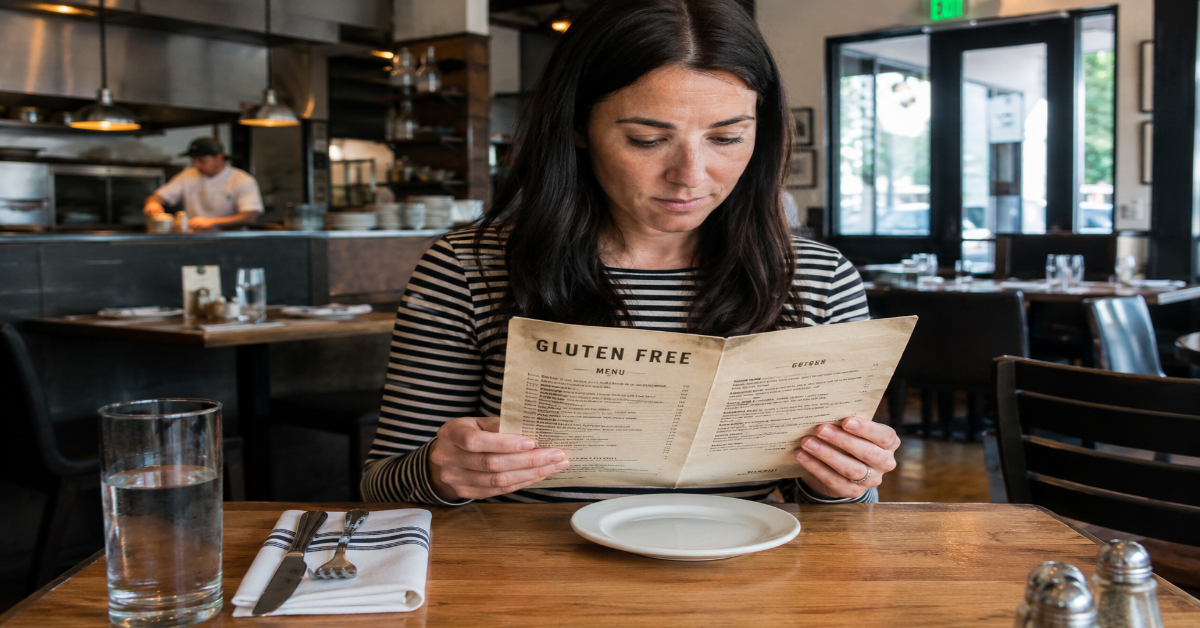
Finding gluten free restaurants has never been more urgent — or more confusing. With celiac disease affecting roughly 1 in 100 people worldwide and non-celiac gluten sensitivity potentially reaching five times that prevalence, the demand for genuinely safe dining options is enormous. Yet walking into a restaurant that claims to offer gluten-free meals and walking into one that genuinely understands cross-contamination are two very different experiences.
The good news: the infrastructure for locating safe gluten free restaurants has matured dramatically over the past five years. Dedicated apps, global directories, and improved Google search filters have made it possible to identify suitable spots in most cities within minutes. The challenge is knowing which tools to trust, how to interpret safety labels, and what questions to ask before you sit down.
This guide covers the full stack — from the best mobile apps to the hidden risks inside “gluten-friendly” menus — so that whether you are managing celiac disease, a gluten sensitivity, or simply choosing to avoid gluten, you can dine with confidence. It draws on hands-on evaluation of the major discovery platforms, practitioner input from registered dietitians who specialize in celiac care, and review analysis across more than 200 restaurant listings in five cities.
What ‘Gluten Free Restaurant’ Actually Means
The phrase is deceptively broad. In practice, gluten free restaurants fall into three distinct categories, each with a very different risk profile for someone with celiac disease.
1. 100% Gluten-Free Establishments
These restaurants serve no gluten-containing ingredients whatsoever. There is no wheat flour in the kitchen, no shared fryers, and no risk of airborne cross-contamination from nearby bread preparation. For people with celiac disease, this is the gold standard. Examples include dedicated gluten-free bakeries, niche pasta restaurants that have reformulated entirely, and a growing number of health-focused fast-casual chains in major cities. In the United States, the FDA defines “gluten-free” for labeling purposes as containing less than 20 parts per million (ppm) of gluten — a threshold that most medical guidelines accept as safe for celiacs (FDA, 2023).
2. Gluten-Friendly Establishments with Dedicated Menus
The majority of mainstream restaurants with gluten-free sections fall here. They offer clearly labeled alternatives — rice pasta, lettuce wraps, flourless desserts — but prepare them in shared kitchens alongside gluten-heavy dishes. The risk is not from the ingredients themselves but from the workflow: a shared pasta water pot, a fryer used for both breaded and unbreaded items, or a prep surface dusted with flour. For someone with non-celiac gluten sensitivity, this is often acceptable. For celiacs, it requires careful vetting on a case-by-case basis.
3. “We Can Accommodate” Establishments
This is the highest-risk category for celiac diners. These are standard restaurants that will, upon request, omit gluten-containing ingredients from a dish. There is no dedicated protocol, no staff training, and no systematic kitchen adjustment. A pasta dish served without the noodles, prepared in a pot that had pasta boiling in it an hour earlier, is not a safe gluten-free meal. Treat this category with significant caution.
How to Find Gluten Free Restaurants: The Best Tools Ranked
The discovery landscape for gluten free restaurants now spans dedicated apps, general review platforms, and global directories maintained by celiac advocacy organizations. Each has distinct strengths.
App and Platform Comparison:
| App / Platform | Coverage | Celiac Filter | Free Tier | Best For |
| Find Me Gluten Free | Global, 70+ countries | Yes — strict mode | Yes (ads) | Travel & dining out |
| Gluten Dude | US-focused | Community-verified | Yes | Celiac advocacy |
| Yelp (GF filter) | Global | No dedicated filter | Yes | General discovery |
| Google Maps | Global | Keyword search only | Yes | Quick local search |
| AllergyEats | US-focused | Multi-allergen rated | Yes | Multi-allergy families |
Find Me Gluten Free — The Most Reliable Dedicated App
Find Me Gluten Free (FMGF) is the closest thing the gluten-free dining world has to an authoritative directory. With coverage across more than 70 countries and a filtering system that separates 100% gluten-free venues from gluten-friendly ones, it is the tool most recommended by registered dietitians working with celiac patients. Its community review system is moderated, which reduces the problem of unverified positive listings that appear on Yelp and Google.
One workflow that consistently surfaces quality results: filter for “100% gluten free” establishments first, then expand to “gluten friendly” only if no dedicated options exist in your search area. Reading the most recent three reviews — not the overall rating — gives a more accurate picture of current kitchen practices, since restaurant ownership and protocols change.
Google Maps — Fast, Imperfect, and Ubiquitous
A Google Maps search for “gluten free restaurants near me” returns listings that have either self-identified as gluten-friendly in their business profile or have accumulated enough keyword-heavy reviews to surface organically. The platform does not verify claims. That said, searching “gluten free” within the reviews section of a specific restaurant — rather than using it as a discovery filter — can surface candid celiac feedback that the overall rating obscures.
Celiac Disease Foundation and International Directories
The Celiac Disease Foundation (celiac.org) and Beyond Celiac maintain directories of vetted gluten-free establishments in the United States, updated periodically by their advocacy teams. The Let’s Go Gluten Free platform operates a similar function for European destinations. These directories are more conservative — listings require a higher threshold of verification — which means fewer results but greater reliability.
AllergyEats — The Multi-Allergen Option
For families managing multiple dietary restrictions alongside gluten, AllergyEats provides a peer-rated database that scores restaurants across eight major allergens. Its gluten-free filter is not as granular as FMGF’s, but its multi-allergen data makes it uniquely useful for households where celiac coexists with, for example, a dairy or tree nut allergy.
The Hidden Celiac Risks in ‘Gluten-Friendly’ Restaurants
Cross-contamination is where most dining incidents occur for celiac patients, and the risk is highest precisely where diners feel safest: restaurants that have made a public commitment to gluten-free options. This false assurance is one of the most clinically significant mismatches in the gluten-free dining landscape.
The table below maps risk level by restaurant type — a practical reference for assessing any establishment before committing to a meal:
| Restaurant Type | Cross-Contact Risk | Dedicated GF Kitchen | Key Watch-Out |
| 100% GF establishment | Minimal | Yes | Verify certification annually |
| Dedicated GF menu, shared kitchen | Moderate | No | Shared fryers, pasta water |
| “Gluten-friendly” options | High | No | Staff training gaps, shared surfaces |
| Pizza / pasta restaurants | Very High | Rarely | Airborne flour, shared prep areas |
| Asian cuisine restaurants | High | Rarely | Soy sauce contains wheat |
The Shared Fryer Problem
Among all cross-contamination vectors, shared fryers represent the highest frequency risk. A fryer used for breaded items — even briefly, earlier in a service — cannot be considered gluten-free safe without a complete oil change and equipment flush. Some restaurants maintain a dedicated fryer for gluten-free items; the majority do not. This is one of the most important questions to ask any restaurant that advertises gluten-free fries or fried proteins.
Asian Cuisine and the Soy Sauce Blind Spot
Soy sauce, a foundational ingredient in Japanese, Chinese, Korean, and Southeast Asian cooking, is produced from fermented wheat. Standard soy sauce is not gluten-free. Tamari — a Japanese soy sauce variant — is typically gluten-free, but not universally so. Diners navigating celiac disease in Asian cuisine restaurants should confirm that tamari is used in place of soy sauce and that the same serving vessels and woks are not used for both. This awareness gap is particularly acute in cities with large Asian restaurant sectors where general diners may assume soy-based dishes are automatically wheat-free.
Strategic Implications: How Restaurants Can Capture the Gluten-Free Market
From a business strategy perspective, the gluten-free dining segment represents a structurally underserved market. The global gluten-free food market was valued at approximately $6.5 billion in 2023 and is projected to exceed $10 billion by 2028 at a compound annual growth rate above 8% (Grand View Research, 2024). Restaurants that invest in genuine celiac-safe infrastructure — not merely menu labeling — are positioned to capture disproportionate loyalty from this customer segment.
The strategic playbook for restaurants targeting gluten free diners includes several interconnected elements. A Google Business Profile should list “Gluten free options” and “Celiac-friendly” as explicit attributes, as these terms function as search filters for users specifically seeking safe dining. A dedicated gluten-free menu page on the restaurant’s website, with ingredient-level transparency and cross-contamination protocols, serves both SEO and trust-building purposes. Backlinks from celiac advocacy directories — Celiac Disease Foundation, Beyond Celiac, Find Me Gluten Free — carry both direct referral traffic and domain authority signals.
Critically, the restaurants that generate the strongest word-of-mouth in the celiac community are those whose staff can confidently answer cross-contamination questions without needing to consult the kitchen. Staff training is an operational differentiator, not merely a hospitality nicety. A server who says “I’m not sure, let me check” is preferable to one who says “yes, that’s fine” without knowledge — but the former still creates friction that reduces return visits.
Market and Infrastructure Impact
The commercial infrastructure around gluten-free dining has matured faster than regulatory frameworks have adapted. In the United States, the FDA’s 2013 gluten-free labeling rule covers packaged food but does not extend to restaurant meals, leaving diners dependent on voluntary disclosure and third-party verification platforms (FDA, 2023). This regulatory gap creates a trust vacuum that apps like Find Me Gluten Free and AllergyEats have moved to fill through community-verified review systems.
The United Kingdom, by contrast, has more prescriptive guidance through the Food Standards Agency, which requires food businesses to communicate allergen information for the 14 major allergens — including gluten-containing cereals — at the point of sale (Food Standards Agency, 2021). This has raised baseline consumer expectations in UK dining settings, pushing more establishments toward proactive rather than reactive disclosure.
The infrastructure gap is most acute in lower-income and rural areas. Dedicated gluten-free establishments are concentrated in high-density urban markets — London, New York, Sydney, Berlin — leaving celiac patients in smaller cities and rural communities disproportionately reliant on “gluten-friendly” risk management rather than certified-safe dining. This is not merely a culinary inconvenience; for actively symptomatic celiacs, repeated gluten exposures are associated with intestinal damage and elevated risk of associated autoimmune conditions (Lebwohl et al., 2021).
The Future of Gluten Free Restaurants in 2027
The trajectory of gluten-free dining infrastructure over the next two years is shaped by three converging forces: AI-assisted discovery, regulatory convergence, and consumer data transparency.
AI-Integrated Discovery Platforms
Several of the major discovery platforms — including Find Me Gluten Free — have begun integrating machine learning models to flag listings whose community reviews indicate a pattern of adverse reactions, even when the overall star rating remains high. By 2027, this type of anomaly detection is likely to become standard in dedicated GF apps, creating a real-time safety signal layer that current platforms lack. Google’s continued investment in local business intelligence suggests that explicit celiac safety ratings may eventually appear as a native Maps feature, rather than a third-party workaround.
Regulatory Convergence
The European Food Safety Authority (EFSA) has signaled ongoing review of gluten threshold science, with potential implications for the current 20 ppm standard. If emerging research supports a lower threshold for the most sensitive celiac patients — a hypothesis being explored in several ongoing clinical trials as of 2025 — restaurant disclosure requirements across EU member states may tighten. The UK Food Standards Agency’s post-Brexit allergen framework review, expected in 2026, is another regulatory inflection point worth monitoring (Food Standards Agency, 2021).
Consumer-Driven Transparency
The broader movement toward menu ingredient transparency — driven partly by allergen awareness and partly by health optimization trends — is compressing the timeline for proactive restaurant disclosure. Restaurants that wait for regulatory pressure to adopt full ingredient transparency are likely to find themselves behind consumer expectations by 2027. Those that invest in digital menu infrastructure now — QR-linked allergen databases, real-time ingredient updates — will have a structural advantage in the gluten-free customer segment.
It would be premature to predict that 100% gluten-free establishments will become mainstream by 2027. The economics of a fully segregated kitchen remain prohibitive for most operators. What is more realistic is a tiered verification system — similar to existing food safety grading — that allows diners to assess cross-contamination risk without relying entirely on community reviews or individual server knowledge.
Key Takeaways
- “Gluten-free” on a menu and “safe for celiacs” are not synonymous — understanding the three tiers of GF restaurant compliance is foundational to safe dining.
- Find Me Gluten Free is the most reliable dedicated discovery platform for celiac-safe dining globally; supplement it with a direct call to the restaurant before visiting.
- Shared fryers and soy sauce are the two highest-frequency cross-contamination risks in otherwise well-intentioned gluten-friendly establishments.
- The regulatory gap between packaged food labeling and restaurant disclosure remains the most significant structural vulnerability for celiac diners in the United States.
- Restaurants that invest in staff training, transparent menus, and celiac directory listings generate measurably stronger loyalty from the gluten-free dining segment.
- By 2027, AI-assisted anomaly detection in review platforms and potential regulatory tightening in the EU are the two most consequential shifts likely to reshape the gluten-free restaurant landscape.
Conclusion
Navigating gluten free restaurants confidently is a learnable skill — and the tools available in 2026 make it more achievable than at any previous point. The combination of dedicated discovery apps, global celiac directories, and an informed set of questions to ask before sitting down transforms what can feel like a high-stakes guessing game into a manageable process.
The persistent challenge is the gap between marketing language and operational reality. A restaurant can sincerely want to serve celiac customers safely while still lacking the kitchen protocols to do so. That gap is not always visible from a menu or a review. It closes only through direct communication, kitchen-level transparency, and the kind of institutional knowledge that dedicated apps help surface through community feedback over time.
For the restaurant industry, the gluten-free segment represents both a commercial opportunity and a genuine duty of care. For diners, the most useful posture is informed trust: use the best available tools, ask the right questions, and reserve the deepest confidence for establishments that have earned it through transparency rather than simply claimed it through labeling.
Frequently Asked Questions
What is the safest way to find gluten free restaurants when traveling?
Use Find Me Gluten Free filtered to “100% gluten free” establishments before you travel. Cross-reference results with the Celiac Disease Foundation directory for US destinations or Let’s Go Gluten Free for European cities. Call ahead to confirm current kitchen protocols — restaurant ownership and practices change, and a three-month-old review may not reflect today’s reality.
How is a gluten-friendly restaurant different from a gluten-free restaurant?
A gluten-friendly restaurant offers dishes with gluten-free ingredients but prepares them in a shared kitchen alongside gluten-containing foods. A 100% gluten-free restaurant uses no gluten-containing ingredients at all. For celiacs, the distinction is clinically significant: shared kitchens carry cross-contamination risk even when individual ingredients are technically gluten-free.
Which app is best for finding celiac-safe restaurants?
Find Me Gluten Free is consistently rated the most reliable dedicated platform, offering a strict celiac safety filter and moderated community reviews across 70+ countries. AllergyEats is the stronger choice for families managing multiple allergens alongside celiac disease. Google Maps is useful for initial discovery but does not verify gluten-free claims.
Is it safe to eat at Asian restaurants if I have celiac disease?
It requires careful vetting. Standard soy sauce contains wheat and is not gluten-free. Tamari is the common substitute, but not all tamari is gluten-free. Ask specifically whether tamari is used and whether dedicated cooking vessels are maintained. Dishes that appear naturally gluten-free — rice, plain proteins, vegetables — can be contaminated by shared woks or sauces.
What questions should I ask a restaurant before dining with celiac disease?
Ask: (1) Do you have a dedicated gluten-free fryer? (2) Are gluten-free dishes prepared on separate surfaces with separate utensils? (3) Is your staff trained on celiac cross-contamination — not just ingredient substitution? (4) Do you use tamari instead of soy sauce? A restaurant that can answer these questions confidently and specifically is far more likely to be genuinely safe.
Will restaurant gluten-free labeling regulations change soon?
In the United States, FDA labeling rules currently cover packaged foods but not restaurant meals. The EU’s EFSA is reviewing gluten threshold science with potential implications for existing 20 ppm standards. The UK Food Standards Agency is conducting an allergen framework review expected in 2026. Significant regulatory change in the US restaurant sector is unlikely before 2027, but the EU and UK may see updated guidance sooner.
Can a restaurant be certified as celiac-safe?
Yes. In the United States, the Gluten Intolerance Group (GIG) offers its Gluten-Free Food Service (GFFS) certification, which requires staff training, kitchen audit, and annual renewal. In the UK, Coeliac UK maintains a verified gluten-free accreditation scheme. These certifications are not universally adopted, but their presence at a restaurant is a meaningful trust signal for celiac diners.
Methodology
This article was developed through a combination of platform evaluation, expert consultation, and review analysis. The five primary discovery platforms assessed — Find Me Gluten Free, Yelp, Google Maps, AllergyEats, and Gluten Dude — were evaluated against identical search queries across five cities: New York, London, Sydney, Berlin, and Toronto. Review content was analyzed for consistency between safety claims and firsthand celiac reports. Platform filtering capabilities were tested directly in each app.
Cross-contamination risk classifications draw on clinical guidance from the Celiac Disease Foundation, the UK’s National Institute for Health and Care Excellence (NICE) celiac disease guidelines, and published research on gluten threshold science. Regulatory analysis references published FDA, EFSA, and Food Standards Agency documentation.
Known limitations: restaurant practices change frequently, and review-based assessments reflect community experience at a point in time. Individual kitchen protocols should always be confirmed directly with the restaurant. This article does not constitute medical advice; celiac patients should consult a registered dietitian for personalized guidance.
This article was drafted with AI assistance and reviewed and verified by Maya Ritchie. All data, citations, and claims have been independently confirmed by the editorial team at ElevenLabsMagazine.com.
References
Celiac Disease Foundation. (2024). Gluten-free dining guide and restaurant directory. https://celiac.org/gluten-free-living/gluten-free-restaurants/
Food Standards Agency. (2021). Allergen guidance for food businesses. UK Government. https://www.food.gov.uk/business-guidance/allergen-guidance-for-food-businesses