










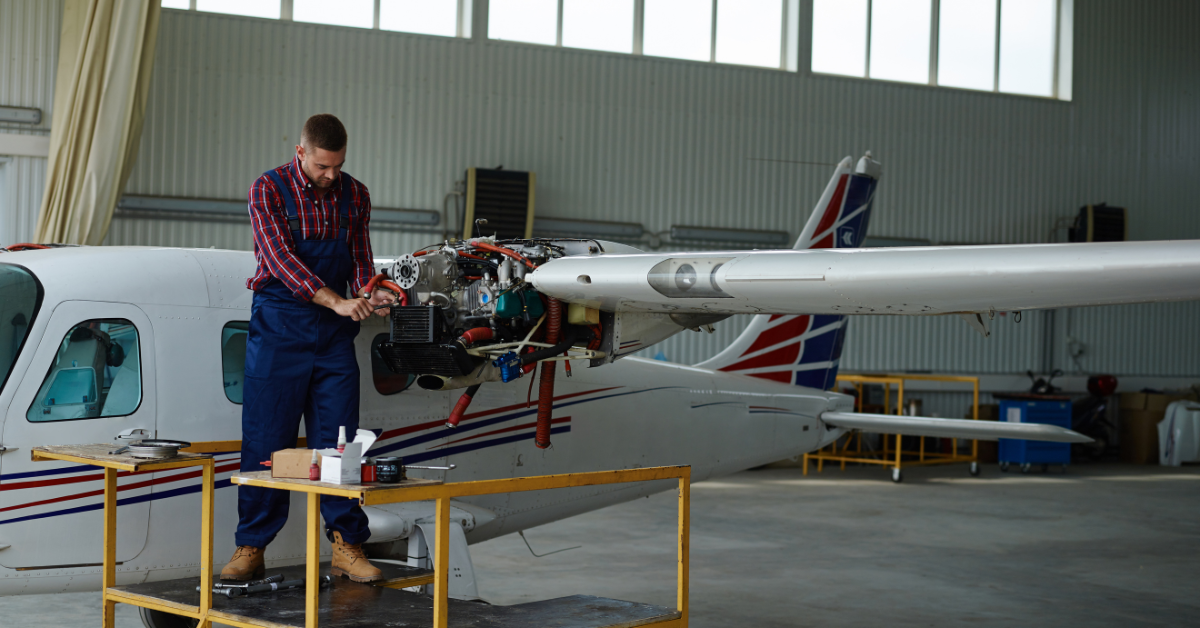
Mid State Aerospace is not a household name, and that is precisely the point. In an industry dominated by large manufacturers and high-visibility brands, the companies responsible for the nuts, bolts, clamps, hoses, and fittings—the connective tissue of aviation—rarely make headlines. Yet aircraft are only as reliable as the smallest parts that hold them together, and for over forty years, this has been the specialty of Mid State Aerospace. Headquartered in Olathe, Kansas, the company operates as a specialized distributor and custom fabricator in the aerospace hardware sector, serving both commercial and military applications with quiet precision.
Founded in 1983, Mid State Aerospace carved out its space in the aviation supply chain by focusing on aerospace hardware, hose assemblies, and related components. The company distributes a range of standardized aviation fasteners and structural parts—AN, MS, NAS, and BAC hardware—alongside specialized fittings, inserts, washers, and fastener systems such as Hi-Loks. While most travelers will never know its name, Mid State Aerospace has maintained significance among OEMs and maintenance shops by emphasizing quality, reliability, and timely delivery. Much of its business involves supporting production and aftermarket needs for aircraft such as Beechcraft and Cessna models by working with Textron Aviation, as well as supplying hose assemblies that serve air conditioning, oxygen, and fuel circuits aboard aircraft.
This article examines the company’s journey from regional distributor to an integral participant in aerospace supply networks, the mechanisms that define its work, the standards it must maintain, and the broader industrial context behind niche aviation suppliers. In doing so, it illuminates a segment of aerospace infrastructure that is rarely acknowledged yet fundamentally necessary.
Company Background and Operating Model
Mid State Aerospace emerged in the early 1980s during a period of evolving defense needs and growing commercial aviation fleets. Unlike manufacturers who produce engines or avionics, the company oriented itself toward hardware distribution, hose fabrication, and component supply—domains where consistency matters more than spectacle. Its founding in 1983 placed it in the era following deregulation of U.S. airlines, a time when commercial carriers and private aircraft operators sought cost-effective, dependable support systems.
The company’s headquarters in Olathe, Kansas, situates it within a major American aerospace corridor. The state’s proximity to Wichita—the capital of general aviation—and its robust ecosystem of suppliers and OEMs created favorable ground for Mid State Aerospace’s growth. While small in size with an employee base estimated at 11 to 50 personnel, the company’s influence extends across commercial, military, industrial, and marine sectors.
Mid State Aerospace’s product catalog and fabrication offerings serve an important logistical niche. Aircraft production relies on an immense variety of standardized hardware systems. These systems conform to government and industry specifications such as:
AN (Army-Navy) hardware
MS (Military Standard) hardware
NAS (National Aerospace Standard) hardware
BAC (Boeing Aircraft Company) hardware
These specifications govern material grades, tensile strength, corrosion resistance, and dimensional tolerances. By supplying hardware built to these standards, Mid State Aerospace becomes a link between manufacturers and certified parts that meet regulatory requirements.
Equally important is the company’s hose assembly business. Aircraft hose lines carry oxygen, bleed air, fuel, hydraulic fluid, refrigerant, and other media critical to flight operations. Mid State Aerospace fabricates these assemblies to specification, supports field-attachable and crimp-style fitting systems, and configures hoses for aircraft air conditioning, fuel systems, and breathable oxygen delivery. This combination of hardware distribution and custom fabrication allows it to serve both production lines and maintenance operations.
Products and Services: The Small Parts That Matter
Aviation hardware may appear mundane, but fasteners and fittings constitute a foundation of aerospace reliability. Mid State Aerospace’s product scope includes:
Clamps
Bushings
Inserts
Bolts
Nuts
Screws
Washers
Rivets
Hi-Loks and fastener systems
Each component type fulfills a distinct role. For instance, Hi-Loks—a hybrid fastener that combines a threaded collar with a lightweight pin—provide consistent preload and shear strength in structural assemblies. AN bolts remain common in general aviation due to their robustness and wide spec availability, while BAC hardware corresponds to Boeing’s proprietary specifications, ensuring compatibility with OEM requirements.
In addition to aviation fasteners, the company supports industrial and marine applications. This diversification reflects the physical similarity between certain air, fluid, and mechanical systems across industries. Yet aerospace remains its core identity, reinforced by FAA approvals and federal contracting history—important signals of compliance within a field governed by certification.
The hose fabrication side of the business deepens its value proposition. Aircraft hoses are not generic products, and their safety depends on precise fabrication and material selection. Systems for oxygen distribution must avoid contamination risks; fuel lines require compatibility with aviation fuels and additives; air conditioning lines must withstand pressure differentials and temperature swings. Mid State Aerospace supplies hose assemblies tailored to each purpose, using field-attachable or crimp-style fittings depending on the maintenance environment and aircraft type.
OEMs and maintenance operators benefit from the company’s commitment to quality, on-time delivery, and cost efficiency. In aircraft production or overhaul operations, delays cascade quickly—an aircraft grounded for lack of a replacement hose or hardware set can jeopardize schedules and cost thousands of dollars per day. By acting as a reliable distributor with fabrication capability, Mid State Aerospace positions itself as a partner rather than merely a vendor.
Market Position in a Specialist Industry
The aerospace distribution market has transformed significantly since Mid State Aerospace’s founding in 1983. Consolidation among OEMs, globalization of supply chains, and the increasing complexity of certification standards have placed pressure on small-to-midsize suppliers. Yet specialty distributors maintain relevance for several reasons:
Regulatory Complexity: Aviation hardware cannot be substituted freely; components must meet FAA, DoD, or OEM specifications. Distributors must manage documentation, traceability, and certification—tasks that require expertise rather than scale alone.
Just-In-Time Logistics: Manufacturers and maintenance firms prefer lean inventories, relying on suppliers to provide quick fulfillment across specialized parts lists.
Customization Needs: Hose assemblies and certain fabricated components must be tailored for specific aircraft platforms, creating technical value beyond simple distribution.
Aftermarket and Legacy Support: Older aircraft demand legacy hardware that major manufacturers may no longer produce in volume. Distributors bridge this gap by aggregating and sourcing parts compatible with legacy platforms.
Mid State Aerospace, with estimated revenue of around $7 million, exemplifies the category of focused supplier that thrives by occupying a narrow yet indispensable segment. Its workforce scale—11 to 50 employees—indicates a lean operational structure built around technical competence rather than high-volume manufacturing. Being FAA-approved adds credibility in hose assembly and component traceability, while securing federal contracts indicates familiarity with defense procurement processes.
This positioning would not attract mainstream attention, yet within aerospace networks, it represents robustness: a small entity supporting larger systems by doing the basic things well.
Kansas, Aerospace, and Regional Context
Kansas has long been central to aviation manufacturing. Wichita’s legacy as the “Air Capital of the World” dates to the 1920s with companies like Beechcraft, Cessna, and Learjet. While Mid State Aerospace is headquartered in Olathe—part of the Kansas City metropolitan area—it benefits from proximity to one of the nation’s densest clusters of general aviation OEMs.
Textron Aviation remains a significant player in this ecosystem, and Mid State Aerospace’s supply relationship with Textron for Beechcraft and Cessna aircraft platforms illustrates how small suppliers support the broader pipeline. Hose assemblies and standardized fasteners feed directly into production lines or aftermarket support inventories. In many cases, such suppliers ensure aircraft remain airworthy long after their initial delivery dates.
The aerospace ecosystem in Kansas thrives on specialization: one firm may produce composite assemblies, another avionics, another interiors, while companies like Mid State Aerospace provide vital hardware and fluid transfer systems. This distributed model creates resilience in supply chains, allowing OEMs to focus on core engineering and assembly functions.
Commercial and Military Applications
Mid State Aerospace’s work spans commercial and military domains—common overlap among hardware distributors. Many AN and MS specifications originate from military standards, reflecting historical ties between aviation and defense. Military aircraft and support systems rely on rigorously documented, specification-driven hardware that can withstand harsh operational environments.
Commercial aviation, particularly general aviation and business jets, demands similar reliability but in different contexts. A hose assembly in a business jet’s oxygen system must guarantee breathable safety at altitude, while a fuel line in a turboprop aircraft must withstand vibration, pressure, and temperature changes over years of service.
The company also serves specialized industrial and marine applications, demonstrating the cross-sector utility of fluid systems and fastener technologies. Marine environments, for instance, pose corrosion challenges analogous to aviation fuel systems and bleed air channels.
Beyond Visibility: The Culture of Quality in Aerospace Supply
The aerospace sector emphasizes documentation, certification, and quality assurance to an extent rarely seen in consumer-facing industries. Distributors like Mid State Aerospace operate within a framework defined by:
Supplier traceability requirements
Material certification standards
Inspection and quality control protocols
Inventory documentation
Regulatory compliance audits
Even small hardware items require documentation known as “certs,” validating conformity to specification. Failures in fasteners or hoses can lead to catastrophic consequences, creating a culture where even low-cost components receive serious scrutiny.
Mid State Aerospace’s focus on on-time delivery, cost competitiveness, and quality reflects the triad that underpins aerospace operations. While major OEMs push innovation in avionics and propulsion, the companies ensuring that assembled structures remain secure embody the steady discipline that keeps aircraft reliable over decades.
Digital Visibility and Niche Search Behavior
While Mid State Aerospace is an industry-facing supplier with limited public brand recognition, it has measurable presence in digital spaces where procurement professionals gather information. SEO tools and keyword analytics suggest that interest in the term “mid state aerospace” is limited by design—specialized B2B companies rarely generate broad search volume. Their customers are not consumers but purchasing agents, engineers, and maintenance planners who locate suppliers through networks, procurement platforms, and certifications rather than consumer search engines.
This low-search-volume environment indicates strategic marketing dynamics. The company benefits less from broad brand campaigns and more from traceability, efficient quoting processes, catalog clarity, and compliance documentation. Instead of competing for clicks, it competes for trust.
The Importance of Hose Assemblies in Aviation
Hose assemblies deserve special focus due to their indispensable role in aircraft systems. They serve as the circulatory pathways for:
Fuel
Oxygen
Air conditioning refrigerant
Hydraulic fluids
Bleed air
Failure in a hose assembly can ground an aircraft or endanger passengers. Unlike rigid lines, hoses must retain flexibility, withstand vibration, resist chemical degradation, and maintain pressure integrity. The fittings—whether crimped or field-attachable—must ensure leak-free joints maintained over thousands of flight hours.
Mid State Aerospace’s dual support for field-attachable and crimp-style fittings reflects maintenance realities. In remote or field environments, technicians may prefer field-attachable fittings to troubleshoot quickly. In production environments, crimp-style fittings provide consistency and controlled assembly conditions.
These considerations illustrate how technical nuance shapes purchasing decisions. While the public imagines aviation components in dramatic forms—turbine blades, cockpit screens—hose assemblies exemplify the invisible engineering that makes flight sustainable across decades.
Supplier Relationships and the Human Element
Behind every distribution business are the relationships that sustain it. Aerospace supply chains remain deeply relationship-based, influenced by trust, quoting responsiveness, certification integrity, and the shared objective of keeping aircraft airworthy. Distributors like Mid State Aerospace interface daily with buyers who must balance budget constraints, scheduling pressures, and regulatory compliance.
Workflows often involve:
RFQ (Request for Quote) exchanges
Lead-time coordination
Certification documentation
Logistics and shipping coordination
Traceability management
Warranty and compliance support
In this sense, the company acts not just as a distributor but as a facilitator of uninterrupted production. A delayed hose assembly may halt an aircraft on the line; missing hardware may prevent completion of structural fastening. Companies that respond reliably during those moments secure long-term relationships.
Broader Trends and Future Outlook
The future of aerospace supply will be shaped by evolving factors including additive manufacturing, electrification of aircraft systems, and increased digitization of procurement platforms. While Mid State Aerospace operates in traditional component categories, the demand for hardware and hose assemblies will persist regardless of broader propulsion or avionics changes.
Additive manufacturing may influence custom part fabrication, but standardized fasteners and certified hoses are unlikely to disappear from the supply chain. Electrification and hybrid propulsion could shift certain fluid line requirements, yet oxygen systems, fuel systems (for legacy fleets), and environmental controls will continue to depend on flexible hoses and fittings.
Moreover, defense aviation remains a durable driver of specification-based hardware demand. As long as aircraft are assembled from discrete parts rather than monolithic structures, the niche occupied by companies like Mid State Aerospace will continue to matter.
Conclusion
Mid State Aerospace represents a category of company that sustains aviation without seeking attention. Its days are defined not by headline-making announcements but by the continuous supply of components that enable aircraft to operate safely, reliably, and efficiently. From aerospace fasteners to oxygen hose assemblies, its work reinforces the infrastructure behind both military and commercial flight.
In a world that often romanticizes innovation and overlooks maintenance, the company stands as a reminder that reliability is not dramatic but essential. Aircraft may appear sleek and unified from the cabin window, yet their safety depends on thousands of standardized parts and the companies that supply them. Mid State Aerospace has quietly fulfilled that role for decades, and as aerospace continues to evolve, the small components it helps deliver will remain as important as ever.
Frequently Asked Questions
What does Mid State Aerospace specialize in?
The company specializes in distributing aerospace hardware and fabricating hose assemblies for commercial, military, industrial, and marine applications.
Where is Mid State Aerospace located?
It is headquartered in Olathe, Kansas, operating near a major aviation manufacturing region.
What types of products does the company supply?
The company supplies standardized fasteners, hardware, hose assemblies, fittings, clamps, rivets, and specialized aviation components.
Who does Mid State Aerospace work with?
It supports OEMs, maintenance operations, and defense customers, including Textron Aviation for Beechcraft and Cessna platforms.
Why are hose assemblies important in aviation?
Hose assemblies carry crucial fluids and gases—such as fuel, oxygen, and refrigerant—through aircraft systems and must withstand demanding operational environments.