






Biotech Tuesday is not a conference, not a symposium, and not the kind of industry mixer where a sales team unfurls banners beside a plate of cubed cheese. It is, instead, a simple idea that has taken root in two of America’s most dynamic life-science regions: gather professionals from biotech, pharma, academia, research, and venture capital, give them a relaxed space with food and drinks, skip the lectures and sales pitches, and let the conversations unfold. That minimalist premise has proven remarkably durable. Over the span of two decades, Biotech Tuesday events have drawn everyone from bench scientists to founders, from investors to regulatory consultants, from recent graduates to seasoned executives — all without the pressure of formal programming.
At its core, Biotech Tuesday answers a need that is both social and professional. In highly technical and deeply siloed fields, the human side of scientific work often finds limited room to breathe. Laboratories can be isolating. Biotech entrepreneurship can be all-consuming. Academic research moves at rhythms that rarely intersect with corporate innovation. By offering recurring occasions where people can connect without an agenda, Biotech Tuesday has become social infrastructure for two ecosystems: Boston, where the original concept has been running since 2002, and North Carolina’s Research Triangle, where the tradition took shape in 2012.
Professionals arrive for many reasons: career exploration, hiring, scouting for talent, discovering new collaborations, or simply finding a community that understands the rhythm of cell cultures and clinical timelines. That such diverse motivations can coexist in a single event — without keynotes, without pitches, without the noise of corporate branding — is what makes Biotech Tuesday both unusual and quietly influential. What follows is a closer look at how this culture developed, how it functions, and what it reveals about today’s life-science workforce.
Origins in Boston: A Low-Agenda Idea That Stuck
The first chapter of Biotech Tuesday unfolded in Boston, a city whose relationship with biotechnology is almost inseparable from its academic and hospital systems. The year was 2002, the industry was expanding rapidly, and networking often meant structured conferences with panels, formal dress, and ample PowerPoint. Into that landscape entered a simpler proposition: meet on a Tuesday evening, pay little or nothing to attend, enjoy a drink, talk science and business, and go home with a wider network than you arrived with.
The Boston series was launched by Seth Taylor, whose vision was deliberately narrow. He wanted to host a gathering defined by pure networking — no lectures, no sales decks, no product demos, no pressure to perform. The formula proved appealing. Crowds ranging from 150 to 350 attendees became typical, drawing people from Cambridge, Boston, the Route 128 corridor, and beyond. Venues rotated around the urban core, often concentrated along Massachusetts Avenue, close to dozens of labs, incubators, and research facilities.
An important rule governed Boston’s events: attendees had to be 21 or older, and undergraduate students were excluded. This was not designed to be elite; it was designed to maintain professional focus. In a region dense with graduate students, postdocs, and young researchers, the events naturally became cross-generational while remaining firmly within professional bounds.
Over the years, the Boston gatherings were occasionally complemented by partnerships and special collaborations, including appearances at broader life-science summits and innovation conferences. Yet the central event — the monthly networking evening — remained unchanged. It was consistent, predictable, modest in format, and large in impact.
The Triangle Chapter: A Not-for-Profit Expansion
A decade later, in 2012, the Biotech Tuesday concept found fertile soil 700 miles south in North Carolina’s Research Triangle Park (RTP), home to a unique blend of academia and industry. Here emerged Triangle Biotech Tuesday, often abbreviated TBT. While Boston’s version had grown as a community initiative, the Triangle version chose a not-for-profit organizational structure, explicitly framing its mission around support for scientists and professionals.
Triangle Biotech Tuesday adopted a monthly cadence — the second Tuesday of each month — and maintained a consistent two-hour window from 5:30 to 7:30 PM. Instead of fixed venues, the events rotated across restaurants, breweries, hotel function spaces, and innovation campuses throughout Raleigh, Durham, Chapel Hill, and RTP proper. This rotation mirrored the geographic diversity of the region, where major universities sit miles apart and corporate campuses sprawl across suburban research districts.
The Triangle gatherings share Boston’s emphasis on informal conversation, but they also incorporate occasional vendor showcases or thematic spotlights. The presence of vendors does not morph the events into sales conferences; it simply adds another conversational layer. Attendees can browse pipetting tools or sequencing services between introductions and scientific small talk, without interrupting the casual atmosphere.
One consequence of the Triangle’s not-for-profit structure is broad inclusivity. Attendees include a wide array of scientific and non-scientific roles: bench scientists, biotech executives, IP attorneys, educators, lab managers, and engineers. Career stages range from graduate students to retired consultants. The result feels less like an industry mixer and more like a regional science community stepping briefly out of its fragmented daily life to gather under one roof.
Features Shared Across Both Cities
Though Boston and the Triangle differ in history, scale, and flavor, the two Biotech Tuesday traditions share several defining characteristics:
Casual Networking as the Core: There are no keynote speakers, pitch competitions, or panel discussions built into the core format. People come to talk, not to be talked at.
Minimal Barriers to Entry: Registration is typically free or low-cost. In an industry known for high conference fees, this is a rare democratizing factor.
Rotating Venues: Both regions avoid anchoring the events in a single location. The rotation keeps crowds fresh and exposes attendees to new neighborhoods, labs, and hospitality spaces.
Life-Science Focus: Attendees come from biotech, pharma, medical devices, research institutes, academia, venture capital, and consulting — the full life-science value chain.
Community Over Marketing: Sales pitches, product demos, and aggressive recruiting are implicitly discouraged. People can talk business, but the tone remains conversational, not transactional.
Food and Drinks as Social Lubricants: Professionals accustomed to fluorescent lab lighting and sterile benches often find relief in environments with warm lighting, shared appetizers, and craft beverages.
Together, these features form a recognizable culture that differs from traditional industry networking.
Who Shows Up and Why
On any given Biotech Tuesday, the crowd reveals the industry’s diversity. A few archetypes commonly appear:
The Scientist Seeking Insight
These attendees often work at the bench and come to hear how science translates into careers. They ask questions about clinical pathways, regulatory strategy, and entrepreneurship that aren’t covered in graduate seminars.
The Startup Founder
Founders attend in search of collaborators, consultants, or investors. A five-minute chat over a drink can accomplish what emails cannot.
The Career Explorer
Some show up between jobs or while contemplating a move. Conversations at these events often lead to informational interviews, referrals, or unexpected opportunities.
The Vendor or Service Provider
These participants, mindful of the no-pitch culture, introduce themselves without brochures. They gain value by listening and building trust rather than pushing products.
The Investor or Strategic Partner
Though fewer in number, investors occasionally attend to monitor the pulse of innovation and meet founders without the stage lights of structured pitch nights.
The Professional Connector
Every event has one or two seasoned networkers who seem to know everyone. They function as unofficial matchmakers, linking scientists with consultants, founders with advisors, and newcomers with the right circles.
The reasons for attending vary — career networking, socializing, professional curiosity, or simply the need to step out of siloed work environments — but they converge in a shared understanding that science is a collective endeavor.
The Atmosphere: Informal, But Not Aimless
There is an art to running events that feel relaxed without descending into chaos. Biotech Tuesday achieves this balance through subtle social design. The absence of programming gives people autonomy over their evening, but the professional context keeps conversation purposeful.
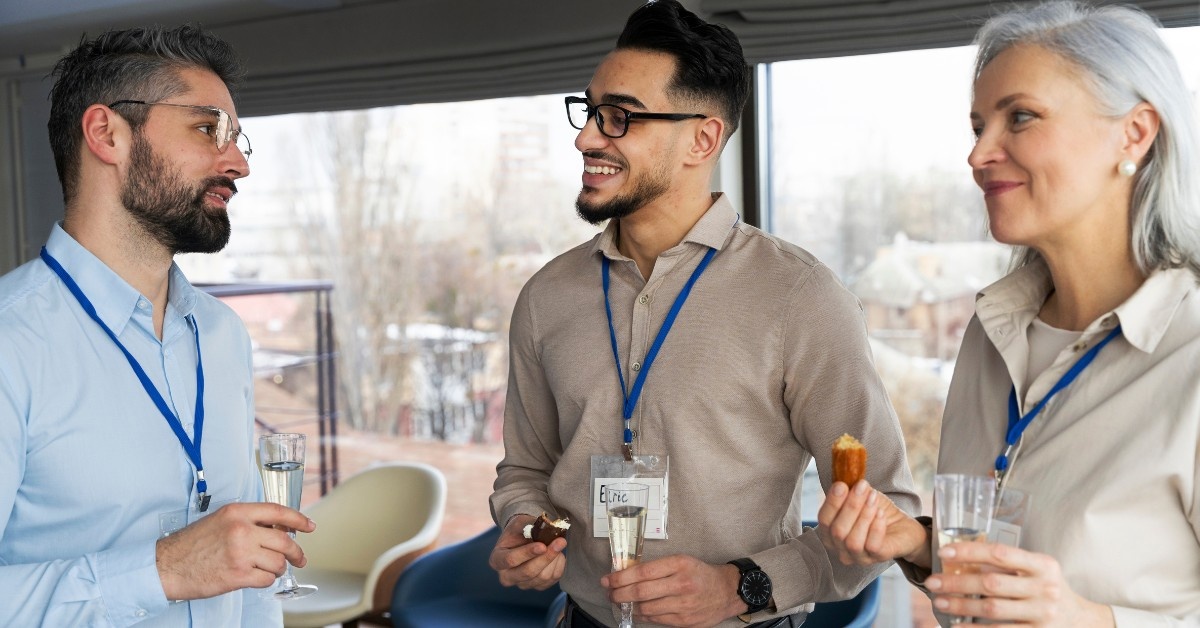
A typical scene might include a cluster of labmates exchanging stories about troubleshooting assays, a startup founder animatedly describing a new diagnostic platform to a potential collaborator, or an attorney explaining patent timelines to a curious postdoc. The dress code is flexible — blazers mingle with hoodies — reinforcing the idea that credentials are secondary to connection.
While the events are friendly, they are not frivolous. The conversations that unfold often involve regulation, venture financing, clinical trial strategy, data analysis, or the practical difficulties of translating discoveries into products. The informality makes these discussions more honest than they might be at a podium.
Impact on Local Biotech Ecosystems
The true influence of Biotech Tuesday is not measured in sign-in sheets or attendance records, but in the subtle ways it has shaped two regions’ professional cultures.
Bridging Academia and Industry
In both Boston and the Triangle, the divide between universities and industry can be profound. For graduate students and postdocs, Biotech Tuesday provides exposure to possibilities beyond academia, demystifying career paths that are rarely explained in PhD programs.
Supporting Entrepreneurship
Biotech startups are famously complex and capital-intensive. Founders benefit from casual access to regulatory experts, IP attorneys, CRO representatives, and potential investors — the ecosystem required to move from idea to enterprise.
Reducing Professional Isolation
Laboratory science can be mentally taxing and socially isolating. Regular opportunities to step outside the lab help sustain well-being and broaden perspective.
Strengthening Talent Pipelines
Recruiters and hiring managers attend not to poach, but to observe. Conversations lead to organic referrals, especially for specialized roles where traditional hiring channels are slow.
Cultivating Regional Identity
Boston’s events reinforce its identity as a global biotech capital, while the Triangle’s gatherings help articulate a regional vision distinct from Boston yet rich with scientific talent.
None of these outcomes were designed by committee; they emerged from the natural consequences of consistent, low-barrier community building.
The Ethics of No-Pitch Networking
One of the most distinctive features of Biotech Tuesday is its insistence on keeping commerce in check. This culture evolved not from written policy but from shared understanding: people should not feel like targets.
The ethics behind this norm reflect a broader shift in professional culture. In fields built on expertise and reputation, transactional networking quickly loses credibility. When conversations are driven by curiosity rather than conversion, trust accumulates faster.
Vendors and consultants benefit as well. Without the pressure to “sell,” they can listen, ask questions, and support others — behaviors that lead to better long-term relationships than handing out flyers ever could.
Partnerships and Community Spillover
Although programming is intentionally minimal within the events themselves, the Biotech Tuesday ecosystem has intersected with larger regional activities over time. In Boston, the brand has occasionally aligned with innovation summits or broader science-focused gatherings, lending its informal ethos to more structured agendas. In the Triangle, organizers have incorporated vendor showcases or spotlight careers nights without letting the events drift into corporate territory.
These occasional collaborations reveal a key point: Biotech Tuesday is not anti-organization; it is anti-over-organization. It resists the temptation to formalize what works precisely because it is loose.
Longevity and Future Directions
The durability of Biotech Tuesday raises questions about what networking will look like in the next decade. Several factors suggest the model is well positioned for the future:
Hybrid Work Environments: With remote and hybrid roles increasing, scheduled social gatherings become more important for maintaining professional cohesion.
Decentralization of Biotech: Biotech is expanding into non-traditional hubs. The Biotech Tuesday model could travel to new regions if local organizers adopt the culture.
Demand for Community: Younger scientists place a high value on mentorship and informal learning — both of which flourish in unstructured networking environments.
Lower Barriers to Participation: Free or low-cost access enables attendance from diverse socioeconomic backgrounds, strengthening the pipeline of talent.
While there is no formal expansion blueprint, the concept’s simplicity makes replication feasible. All it requires is consistency, a venue, and an understanding of how to cultivate culture without dictating it.
Conclusion
Biotech Tuesday represents a rare constant in a field defined by rapid change. It bridges academia and industry, lab benches and boardrooms, newcomers and veterans, all through an ethos of relaxed conversation. In Boston, it emerged as a grassroots counterweight to formal conferences. In the Triangle, it grew into a not-for-profit community anchor. Today it remains a reminder that the life sciences are not merely driven by data and protocols, but by people — people who need places to connect, ask questions, exchange ideas, and simply feel part of something larger.
In an era when so much networking unfolds behind screens, Biotech Tuesday insists on something older and more elemental: eye contact, shared space, and the subtle alchemy of being in the same room. Its impact cannot be measured in citations or patents, yet it quietly shapes the ecosystems that produce both. For scientists and professionals navigating the complex paths of modern biotech, that may be the most valuable outcome of all.
Frequently Asked Questions
What is Biotech Tuesday?
It is a recurring networking event series for biotech and life-sciences professionals, centered on casual conversations rather than lectures or sales pitches.
Where does Biotech Tuesday take place?
The concept is most established in Boston and North Carolina’s Research Triangle, with monthly events in both regions.
Who attends these events?
Attendees include scientists, founders, consultants, investors, students, educators, and professionals from biotech, pharma, academia, and related sectors.
Do the events cost money?
They are typically free or low-cost, but registration is required.
Why no formal presentations or sales pitches?
The events are designed to facilitate authentic networking without the pressure of being sold to or spoken at.