








On May 26, 2025, British Airways flight BA286, an Airbus A380 traveling from San Francisco to London, declared a sudden mid-air emergency that captured global attention. Passengers and crew faced an unforeseen medical crisis, prompting the aircraft to transmit a squawk 7700 general emergency code, signaling immediate priority handling by air traffic control. This rare event highlights the intricate systems airlines have in place to protect passengers and respond swiftly to emergencies at 30,000 feet.
The incident demonstrated the interplay between onboard medical response, pilot decision-making, and ground coordination. As the flight crossed multiple time zones and airspaces, the airline activated emergency protocols that ensured passenger safety while preparing Heathrow Airport for priority landing. The story of BA286 underscores not only the unpredictability of air travel but also the precision and professionalism required to manage mid-flight crises. By examining the facts, timeline, crew training and aviation safety systems, this report offers a detailed look into what happens when routine travel becomes extraordinary.
What Happened on British Airways Emergency Flight BA286
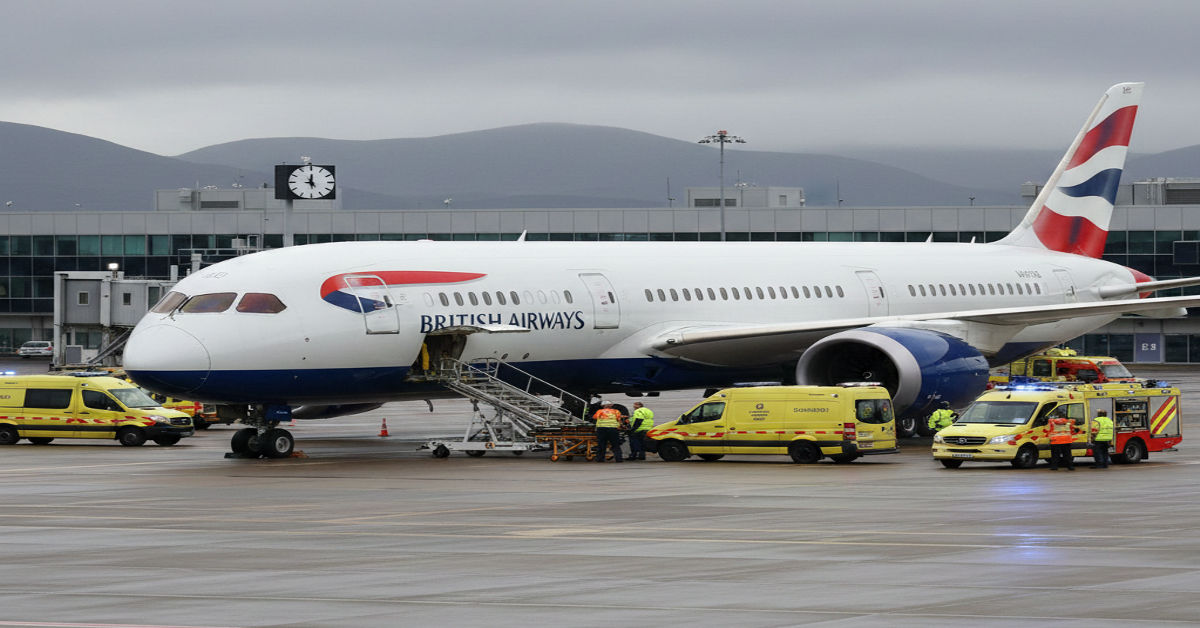
Flight BA286 departed San Francisco International Airport at 19:33 PDT on May 26, 2025, carrying hundreds of passengers and crew aboard the Airbus A380. Approximately nine hours into the flight, the crew declared an emergency due to a passenger experiencing a critical medical condition. The aircraft transmitted squawk 7700, the internationally recognized emergency transponder code, alerting all radar facilities and prioritizing the flight for immediate landing.
The decision activated multi-agency coordination, including air traffic controllers, airport emergency teams, and medical staff on standby. Despite the urgency, the flight safely landed at London Heathrow’s runway 27L, where paramedics met the aircraft to provide immediate care. No other passengers were harmed, and the airline efficiently handled post-landing logistics, including rebooking and support. This successful outcome demonstrates the importance of emergency preparedness and rapid decision-making in modern aviation.
Aviation Emergency Protocols
Airline crews follow stringent emergency protocols to manage in-flight incidents. A squawk 7700 declaration communicates a general emergency, allowing controllers to provide priority routing, clear airspace, and prepare emergency teams on the ground.
| Protocol | Purpose | Typical Response |
| Squawk 7700 | General emergency alert | Priority landing, ATC coordination |
| Mayday Call | Verbal distress signal | Immediate response, runway prep |
| Airline SOPs | Standard operating procedures | Medical, mechanical, or security measures |
| Ground Emergency Teams | Airport readiness | Fire, medical, and safety teams |
These protocols ensure a coordinated response between cockpit, cabin, and ground staff, optimizing outcomes during emergencies. On BA286, telemedicine support and onboard emergency medical kits allowed the crew to stabilize the passenger while maintaining operational control. The combination of technology, training, and coordination exemplifies how airlines anticipate and manage rare but high-stakes situations.
Crew Training and Medical Preparedness
British Airways invests heavily in crew training for emergencies. Pilots and cabin staff undergo simulations for medical incidents, mechanical failures, and other critical scenarios. They are trained in the use of defibrillators, first aid kits, and communication with ground-based medical teams.
Aviation safety consultant Dr. Lillian Myles explains, “Crew preparedness—both procedural and psychological—is critical when seconds count. Stabilizing a patient, coordinating with ATC and maintaining passenger calm directly affects the outcome.”
Retired transatlantic pilot Captain Felix Sutton adds, “When a pilot declares an emergency, the cockpit becomes a hub of coordination. The transponder communicates urgency before the captain even speaks, which is essential for response efficiency.”
Aviation analyst Sara Hughes emphasizes, “Emergencies like BA286 remind us that while safety systems are robust, unpredictable human factors still require flexibility and expertise from crew and ground staff alike.”
Timeline of Events
| Time (Local) | Event |
| 19:33 PDT | BA286 departs San Francisco for London. |
| ~Over Scotland | Crew declares squawk 7700 emergency due to medical incident. |
| 13:39 BST | Aircraft lands safely at Heathrow’s runway 27L. |
| Post-Landing | Medical teams meet aircraft; passenger treated promptly. |
| Later | Passengers accommodated; flight operations resumed. |
The timeline highlights the efficiency of aviation systems, showing how a complex emergency is resolved over multiple time zones and airspaces.
Legal and Passenger Considerations
UK Regulation 261/2004 outlines passenger rights during delays or interruptions caused by extraordinary circumstances, including medical emergencies. While financial compensation is typically not provided for emergencies outside airline control, passengers are entitled to care, accommodation, and rebooking assistance.
The Montreal Convention further defines airline liability for passenger injury during international flights, establishing a legal framework for addressing medical emergencies like the one experienced on BA286.
Expert Perspectives
Experts emphasize the broader significance of such incidents in aviation safety:
- Dr. Lillian Myles: “Rapid assessment and coordination in emergencies save lives.”
- Captain Felix Sutton: “The declaration of squawk 7700 enables global prioritization of the aircraft.”
- Sara Hughes: “Even with modern systems, human judgment and training are irreplaceable in crisis situations.”
These insights reflect the multi-layered approach airlines employ to manage emergencies, from crew training to regulatory compliance.
Takeaways
- British Airways emergency flight BA286 declared a squawk 7700 mid-air due to a medical incident.
- The Airbus A380 landed safely at London Heathrow with full emergency support.
- Emergency codes trigger multi-agency responses, from ATC to paramedics.
- Crew training and telemedicine are critical in stabilizing passengers.
- Passengers are supported under UK261 but are not automatically compensated for medical emergencies.
- Incident demonstrates airline safety systems’ effectiveness and crew preparedness.
Conclusion
The events aboard British Airways emergency flight BA286 underscore both the unpredictability of long-haul aviation and the sophistication of modern airline safety systems. Every step—from emergency transponder signals to ground medical coordination—illustrates a carefully choreographed response designed to protect passengers and crew. While the medical emergency could have escalated, the crew’s professionalism and the robust protocols of British Airways ensured a safe landing without further incidents. BA286 stands as a case study in preparedness, offering lessons for aviation professionals and travelers alike. Emergencies like this remind us that, behind every routine flight, layers of expertise and planning quietly safeguard human life.
FAQs
What caused the emergency on British Airways flight BA286?
A passenger suffered a critical medical issue, prompting the crew to declare a squawk 7700 emergency.
What is a squawk 7700 code?
It is an emergency transponder code that signals ATC of a general emergency, allowing priority landing.
Did the flight divert to another airport?
No, BA286 continued safely to London Heathrow with priority handling.
Are passengers compensated for emergencies?
Under UK261, passengers are assisted but not financially compensated for medical emergencies outside airline control.
Were there any fatalities?
No fatalities occurred; the passenger received treatment immediately after landing.
REFERENCES
AirLive. (2025, May 27). British Airways A380 flight BA286 from San Francisco is declaring an emergency. AirLive. https://airlive.net/emergency/2025/05/27/british-airways-a380-flight-ba286-from-san-francisco-is-declaring-an-emergency/?srsltid=AfmBOorCcQb75IJkJRCTuTad5a2vvOWVQ7M6eltndgDioowfhydSnMwG AIRLIVE
TheTipsyGypsies. (2025, August 13). British Airways Emergency Flight BA286: Full May 2025 Story. TheTipsyGypsies. https://thetipsygypsies.net/british-airways-emergency-flight-ba286/ thetipsygypsies.net
Aviation Safety Network. (2016, October 25). Serious incident Airbus A380‑841 G‑XLEB (Flight BA286 emergency landing Vancouver). Aviation Safety Network. https://aviation-safety.net/wikibase/190921 Aviation Safety Network
The Guardian. (2016, October 25). British Airways flight to Heathrow diverted as crew falls ill. https://news.sky.com/story/british-airways-flight-to-london-heathrow-diverted-as-crew-falls-ill-10631780 Sky News
AirliveNews (Instagram). (2025, May). British Airways flight #BA286, operating an Airbus A380, declared a general emergency. Instagram. https://www.instagram.com/p/DKLUes4MAtV/?hl=en